‘Chromatic Frankenstein’s Monsters?’: Restoration, Colour and Variants of Georges Méliès’s Voyage dans la Lune | Wendy Haslem | Senses of Cinema

By Wendy Haslem

Wendy Haslem lectures in Cinema and Cultural Studies, University of Melbourne.

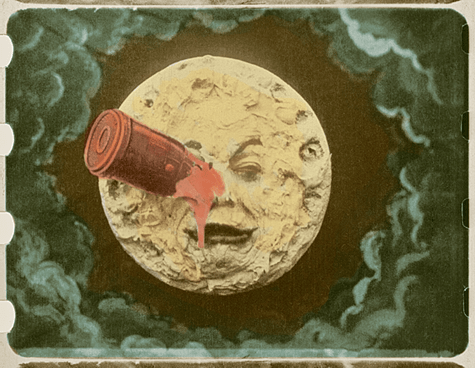
The restored edition of ‘the original colour version’ of Voyage dans la Lune (Trip to the Moon, Georges Méliès, 1902/Lobster Films, 2011) opened the Cannes Film Festival to great wonder and acclaim in 2011. The one hundred and nine years separating the first screening of this famous science fiction film image001and its recent revision bridge the beginning and, for some film historians, the end of celluloid film culture. (1) In 1917 Méliès was forced to destroy much of his collection as 400 of his films were melted down to form heels for the boots of soldiers during WWI. (2) The coloured version of Trip to the Moon was discovered in 1993 amongst a collection of 200 silent films donated by an anonymous collector to the Filmoteca de Catalunya in Barcelona. (3) The reconstruction of the coloured version of Trip to the Moon poses questions about the status and evolution of cinema at these pivotal moments. How do newer technologies, particularly those used in digital restoration, impact on the original print? Is colour restored or revived by digital techniques? Is the digital restoration of Trip to the Moon a conservation project, or does it result in the creation of yet another new version of the film? An investigation of the 2011 restoration blurs traditional notions of originality and complicates the relationship between reproduction and conservation. The restoration highlights the evolving complexities inherent in connections between film history and digital cinema, with the 2011 incarnation of Trip to the Moon existing at the intersection of celluloid and digital cultures.

The pioneering films by Méliès have been described by Tom Gunning as creating an aesthetic of astonishment, emblematic of the ‘cinema of attractions’. (4) This classification emphasises the ‘thrill of display’ at the spectacle of early cinema, aspects that are crucial to the presentation of illusion in the trick films developed by the magician Méliès. (5) André Gaudreault notes the degree of self reflexivity in Méliès’s early cinema, suggesting that the aim was to encourage spectators to ‘appreciate the illusion’ by recognising the camera’s presence and the potential audience. (6) Gaudreault writes that “he interpellates both the camera and the spectator into the text as he acknowledges their existence through direct address”. (7) This is a cinema of active display. In the performance of the ‘trick’ effect, Méliès both shows, performs the illusion and conceals the filmic devices that create the illusion. However, whilst the perception of Méliès’ cinema as part of the attractions tradition is clear, it is also important to acknowledge the depth, range and intermediality of his oeuvre.

Matthew Solomon describes Trip to the Moon as an intermedial film, a film created from a matrix of influences, one that continues to inspire new forms of the moving image. (8) The original version was inspired by the 1865 Jules Verne novel De la Terre à la Lune (From the Earth to the Moon). Méliès reveals that:

“The idea of A Trip to the Moon came to me when I was reading a book by Jules Verne called From the Earth to the Moon and Around the Moon. In the book, the humans could not land on the moon … so I imagined, in such a way that I could put together some arresting and amusing fairytale images, show the outside and inside of the moon, and some monsters who might live on the moon, add one or two artistic effects (women representing the stars, the comets, … snow effects, the bottom of the sea). (9)

Other influences include the HG Welles novel The First Men in the Moon which was published in France in the same year as Trip to the Moon was filmed. And, according to Laurent Mannioni, it is quite possible that news of the exhibit at the Pan American Exhibition in Buffalo, called Trip to the Moon (1901) would have influenced Méliès. (10) The turn of the century inspired visions and imaginings of voyages to distant places. Trip to the Moon is a film that imagines a voyage to the moon 67 years prior to the first landing. This was the first film to imagine the earth from the moon and to offer the reverse perspective of the moon from the earth. It is also the first example of science fiction on film. However, the mythology that surrounds Méliès suggests that he is central to a range of ‘firsts’. According to the catalogue that was produced to accompany the release of the 2011 version of Trip to the Moon, Méliès was the first director to design and equip a film studio (his ‘image capture theatre’), to create storyboards for his film productions and to develop editing techniques (particularly appearance/disappearance, substituting, multiplying effects) to facilitate special effects and trick photography with moving images. (11) Whilst Trip to the Moon became the most recognised of all of Méliès’s films, Elizabeth Ezra reveals that “At first, however, he had difficulty persuading fairground exhibitors to buy it because of the high price resulting from the film’s lavish production costs; so he lent the film to exhibitors free of charge for a single showing, confident that its popularity with audiences would convince exhibitors that they would recoup his asking price”. (12) At this stage in the emerging film industry, individual films were sold to exhibitors directly. Ultimately, Méliès is credited as inventing the cinema of ‘show and entertainment’, but the impact of his influence extends across the production, distribution and exhibition sequence. The display of Méliès’s innovation becomes a key consideration in the process and affect of restoration.

The restored version of Trip to the Moon was screened on a hot night in the Piazza Maggiore, officially opening the 2011 ‘Il Cinema Ritrovato’ film festival in Bologna, Italy. (13) The audience recognised the significance of this second public screening of the restoration. With all seats filled and very little standing room left in the Piazza, I stood at the back of the square, watching a film that I had seen in black and white many times, but this time it hit the screen in the beautiful watery, translucent colours characteristic of the effects of hand painting in early film and photography. There was such a thrill in the crowd that although I was standing, I felt like I was jumping. I certainly wasn’t standing still. This resonance was in response to the colours of Trip to the Moon. As early as 1929 Kodak identified the potential for colour to affect the emotions. Whilst Kodak developed Sonochrome tints like Rose Doree to ‘quicken the respiration’ and Peachblow for ‘brief, joyous moments’, (14) twenty years before, Méliès applied translucent aniline dyes to create spectacle and to provoke sensation in nascent cinema. Writing on early cinema, Tom Gunning notes that “colour helped fashion a culture of sensationalism, based in sensual and emotional intensity and dedicated to inciting desire rather than orderly behaviour”. (15) This impression of colour represents the convergence of two pivotal cinematic moments. Evidence of the old and new can be detected across the surface and secreted in the details of the projected image. By maintaining traces of the old within the new medium, the 2011 colour restoration reveals the duality of innovations in celluloid and digital technologies, an acknowledgment of their respective historical moments, but as I will argue, ultimately indicating their inextricable connection.

Full Article: ‘Chromatic Frankenstein’s Monsters?’: Restoration, Colour and Variants of Georges Méliès’s Voyage dans la Lune | Senses of Cinema.

Documentary Filmmakers Decide How to Present Compelling Evidence | Michael Rabiger | Nieman Reports

cropped-acl_decked2.jpg

Using film to tell a story changes nearly everything.

By Michael Rabiger

Similarities abound between the reporting methods used by documentary filmmakers and print journalists. But the results are regarded differently, with more people believing the documentary is more objective. The information on the screen often seems unmediated and more reliable. This perception is in part a holdover from television’s early years when its elder statesmen—Edward R. Murrow, Walter Cronkite—assumed the stance of objectivity. Documentary also seemed impartial because an inanimate instrument like a movie camera, taking “truth 24 times a second,” seemed incapable of deception. Film (including video) is always in the present tense, while print journalism tends to reside in the reflective past tense.

But this perception of impartiality omits the human element. It is, after all, a human decision—an insertion of subjectivity—that places a camera in a particular location, chooses a lens by which to render space and perspective, selects a recording medium, each with its own bias in color and contrast, and decides when to turn the camera on. In the editing room, there are choices to be made about what material is significant and the order and juxtaposition of segments on the screen.

Documentary journalists use a variety of techniques to try to effectively bring viewers into contact with a subject, whether it be famine, family ordeals, or farmers confronting hoof-and-mouth disease. At the core of any approach is the presentation of compelling evidence, and this evidence can be gathered differently. Filmmakers working on issue-oriented documentaries might use a passive, observational style for events that tell themselves, use active, probing interviews where useful, or even bring two parties into confrontation to develop and present the crux of the information. In character-driven documentaries, a particular character or group is chosen to generate the basic situation, then followed and perhaps interrogated over time to illustrate the situation’s causes and its consequences.

What emerges, after editing, is never actuality but an artfully constructed impression of it, for all documentaries, even the most spontaneous, are constructs. Typically, authorship of a documentary rests with a team, the film ultimately representing their shared experience and perspective. This process starts as soon as they decide what images to collect for their film’s bank of visual and aural records, which are infused with the values, beliefs, circumstances and instruments current at the time of recording and editing.

Nearly every documentary relies on people who appear on camera as part of the story. From their perspective, the hope is that pertinent truths—as they understand them—survive the process of filming or reporting. But can the journalist or documentarian be trusted to accurately represent these truths?

When film is an intermediary, this question can become more difficult to answer. While a reporter conducts an interview, a camera takes footage. Taking and using is at the heart of documentary filmmaking and so, unfortunately, is misrepresenting, though it happens differently with film than it does in print. In reading an article, actions are described, voices are imagined. What gets lost are dense layers of meaning that the person conveyed vocally, facially and bodily. In the hands of skillful writers, these will be selectively implied, but to exist they depend on a writer’s sensitivity to nuance. The same transaction, captured by the camera, gets it all the first time, and the footage can be searched afterwards for deeper layers of meaning.

In making the BBC film “The Battle of Cable Street,” about the 1930’s British fascist leader Sir Oswald Mosley, I learned most from running and rerunning sections of the interview. His paternal habit of widening his eyes when telling you certain things became more and more sinister as my editor and I realized when and why he did it.

A most extreme case of what a documentary can reveal—and perhaps set in motion—was Alan and Susan Raymond’s series in the 1970’s, “An American Family.” While filming the daily lives of the Louds, a family chosen as representative of American white middle-class life, the son announced that he is gay, the husband proved a compulsive womanizer, the wife filed for divorce, and the family went into meltdown.

When the series went on the air, critics and audiences alike were convinced that manipulative filming and the family’s desire to make a high dramatic impression had colluded to create these changes. And who knows that they were entirely wrong? All observation changes what is being observed, but being filmed 14 hours a day for seven months probably changes it more than most. When the Louds signed on, they were unaware of the crucible they were entering, although the Raymonds insist they duly warned them.

The public outcry surely affected how family members saw themselves on the screen. The Louds did not see the filmmakers’ perspective emerging until the programs were broadcast and, as a result, began to see each other in a different light. Shocked to discover what had been created from their input, some of the family objected bitterly, saying they felt like victims of alchemy and treachery. Lives were wrecked, careers broken, and for years the cause of the intimate TV documentary seemed irretrievable.

Full Article: Nieman Reports | Documentary Filmmakers Decide How to Present Compelling Evidence.


Debt based money | The Secret of Oz | Dir. Bill Still | Documentary

the-wizard-of-oz-41588

What’s the Movie About?

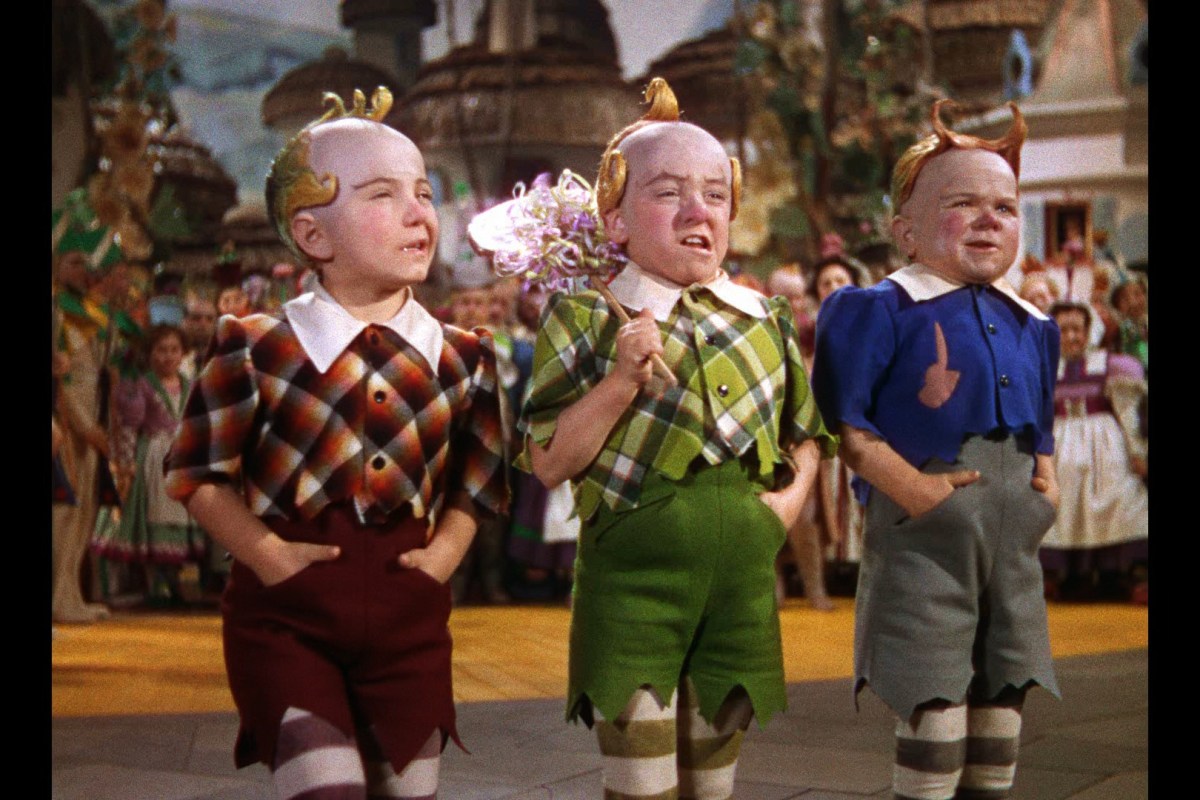
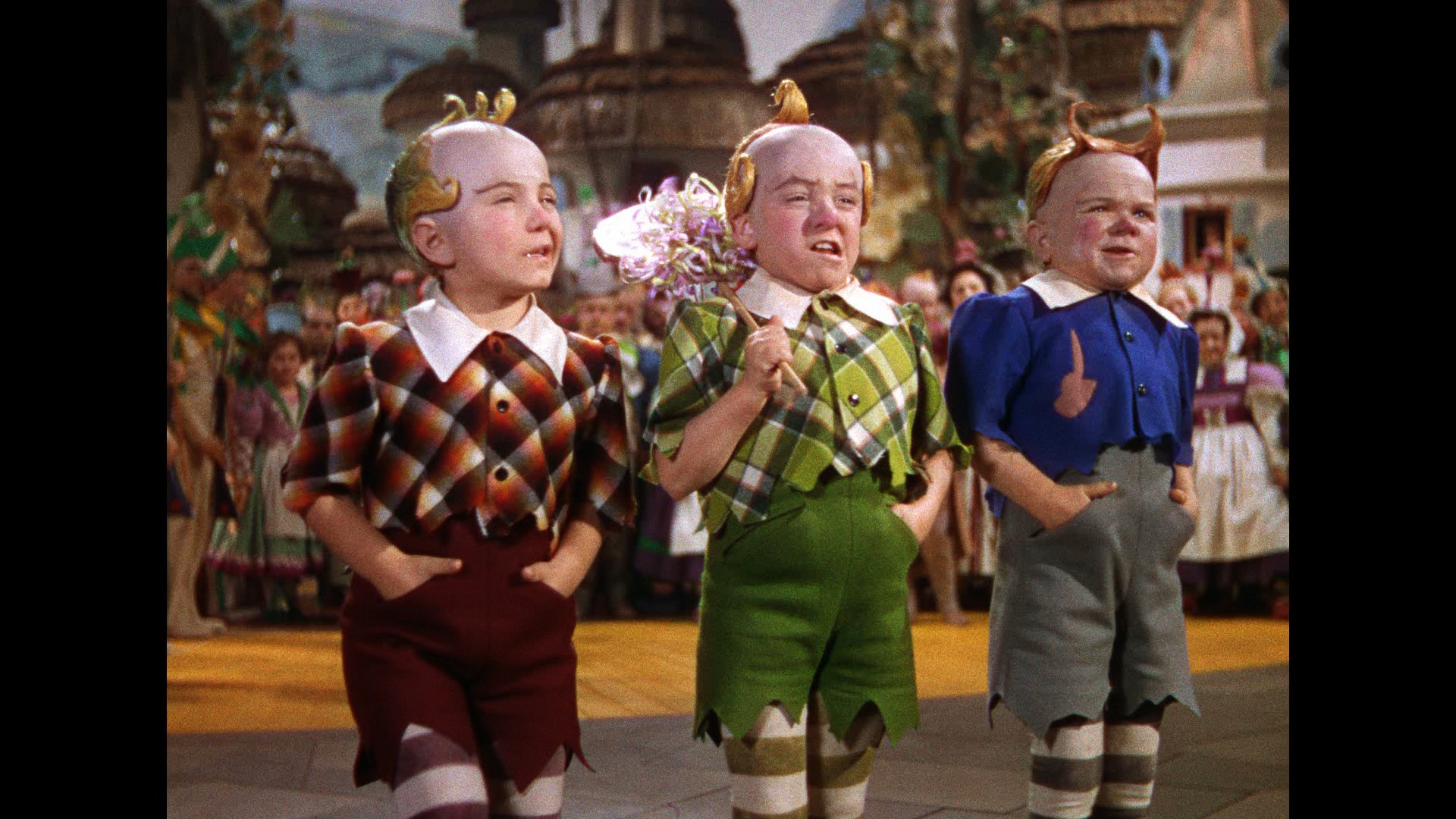
It is well known in economics academia that The Wonderful Wizard of Oz written by L. Frank Baum in 1900 is loaded with powerful symbols of monetary reform which were the core of the Populist movement and the 1896 and 1900 president bid of Democrat William Jennings Bryan.

The yellow brick road (gold standard), the emerald city of Oz (greenback money), even Dorothy’s silver slippers (changed to ruby slippers for the movie version) were the symbol of Baum’s and Bryan’s belief that adding silver coinage to gold would provide much needed money to a depression-strapped, 1890s America.

We believe Baum’s symbols represent the only solution to relieve the growing economic hardship here in America — and the rest of the world. Practically speaking, 2009 marks the 70th anniversary of the 1939 MGM release of the The Wizard of Oz movie, so interest will be very high. Even Oz websites put up by kids get millions of hits.

Who’s In It?

· Joseph Farah, Founder and CEO of WorldNetDaily.

· Peter Schiff, President of Euro-Pacific Capital, the leading “bear” on Wall Street, author.

· Byron Dale, author and monetary reform expert, author of many books.

· Ellen Brown, author Web of Debt, attorney, and monetary reform expert

· James Robertson, former official in a variety of slots in the UK government, and head of the Inter-Bank Research Organization, author of many books

· Prof. Nick Tideman, VA Tech University School of Economics

· Prof. Michael Hudson, President of The Institute for the Study of Long-Term Economic Trends (ISLET), a Wall Street Financial Analyst, Distinguished Research Professor of Economics at the University of Missouri, Kansas City and author of Super-Imperialism: The Economic Strategy of American Empire (1972 and 2003)

· John Keyworth, Curator, Bank of England Museum

· Prof. Quentin Taylor, professor of political science at Rogers State University

· Reed Simpson, banker, asset manager

Intro

“In 1996, in a documentary called “The MoneyMasters”, we asked the question why is America going broke. It wasn’t clear then that we were, but it is today. Now the question is how can we get out of this mess. Foreclosures are everywhere, unemployment is skyrocketing — and this is only the beginning. America’s economy is on a long, slippery slope from here on. The bubble ride of debt has come to an end.

“What can government do? The sad answer is — under the current monetary system — nothing. It’s not going to get better until the root of the problem is understood and addressed. There isn’t enough stimulus money in the entire world to get us out of this hole.

“Why? Debt. The national debt is just like our consumer debt — it’s the interest that’s killing us.

“Though most people don’t realize it the government can’t just issue it’s own money anymore. It used to be that way. The King could just issue stuff called money. Abraham Lincoln did it to win the Civil War.

“No, today, in our crazy money system, the government has to borrow our money into existence and then pay interest on it. That’s why they call it the National Debt. All our money is created out of debt. Politicians who focus on reducing the National Debt as an answer probably don’t know what the National Debt really is. To reduce the National Debt would be to reduce our money — and there’s already too little of that.

“No, you have to go deeper. You have to get at the root of this problem or we’re never going to fix this. The solution isn’t new or radical. America used to do it. Politicians used to fight with big bankers over it. It’s all in our history — now sadly — in the distant past.

“But why can’t we just do it again? Why can’t we just issue our own money, debt free? That, my friends, is the answer. Talk about reform! That’s the only reform that will make a huge difference to everyone’s life — even worldwide.

“The solution is the secret that’s been hidden from us for just over 100 years — ever since the time when author L. Frank Baum wrote “The Wonderful Wizard of Oz.”

—-The Kinsey Syndrome—- The devil’s in the details; Do you know them or just what you’ve been told? | Dir. Christian J. Pinto | Documentary

law1

The Kinsey Syndrome

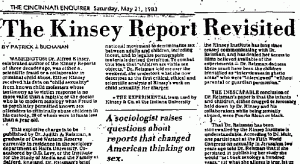
This documentary shows how “The Kinsey Reports” have been used to change the laws concerning sex crimes in America, resulting in the minimal sentences so often given to rapists and pedophiles. Further explained is that the Kinsey data laid the foundation for sex education — training teachers, psychologists and even Catholic priests in human sexuality. What has been the consequence? And what was Kinsey’s research really based upon?
Working secretly in his attic, Dr. Kinsey was one of America’s original pornographers. His influence inspired Hugh Hefner to launch Playboy Magazine – the “soft” approach to porn – which in time would escalate the widespread use of pornography through magazines, cable TV and the Internet. In 2006 the California Child Molestation & Sexual Abuse Attorneys reported that: “The number of victims of childhood sexual abuse and molestation grows each year. This horrific crime is directly tied to the growth of pornography on the Internet.”

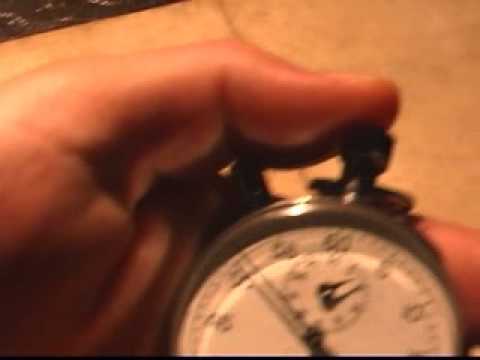
Perhaps most disturbing, Alfred Kinsey has been accused of training pedophiles to work with stopwatches and record the responses of children being raped – all in the name of “science.” Among his workers was a Nazi pedophile whose relationship to Kinsey was exposed in a German court. The information from these crimes was then recorded in “Table 34” of Kinsey’s Sexual Behavior in the Human Male. How can lawmakers use such a document to define the moral parameters of our society?

Why has the truth about Kinsey been suppressed for so long? And what can Americans do to make a difference?

American History Films Presents, A Jude 3 Production
Written & Directed by: Christian J. Pinto
Associate Producers: Clark Aliano, Steve Aguilar
Executive Producers: Joseph M. Schimmel, Christian J. Pinto
Running Time: Approx 2 hours
(c) 2008. All rights reserved.
Consumer Release Date: December 2008
http://www.thekinseysyndrome.com

More info…

—-The Kinsey Syndrome—-.

http://www.drjudithreisman.com/the_coverup.html

http://www.newswithviews.com/Devvy/kidd454.htm

Kyle Hunt from Star Theory discusses Kinsey and much more for some thought provoking analysis.

Star Theory Radio on Oracle Broadcasting

Foreign Intrigue (1956) | Dir. Sheldon Reynolds

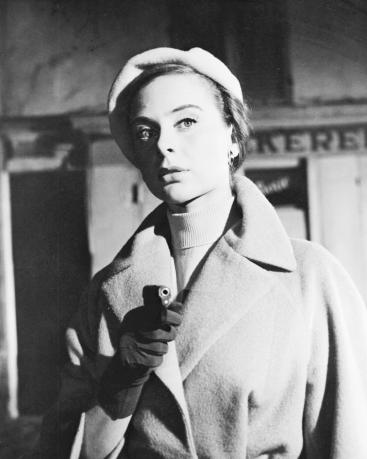
When his wealthy boss dies from a sudden heart attack, Dave Bishop (Robert Mitchum) decides to find out more about the enigmatic businessman, starting with the source of his fortune. He uncovers a mystery that leads him across Europe and dates back to World War II. As Bishop digs deeper, he learns that his boss was involved in a blackmail scheme with links to the Nazis — information that puts his own life in danger.

Why We Love Film | Ken Rockwell | kenrockwell.com

Why We Love Film

by Ken Rockwell

Film versus Digital Capture

“Capture” means how an image or data is acquired.

After it’s caught, either on film or with digital capture, all of them are workable and archivable and printable in a computer, since all my film is scanned at the time of development.

If I capture on film, it all goes into the same digital workflow, archive and backup plan. The only difference is less work, less expense, better-looking files and more fun with film capture.

Film capture also gives me the option of a second, parallel workflow that both gives me a second set of permanent, eternally legible backups (the film itself), as well as the freedom to edit, print and project directly from the film if I so choose.

Dynamic Range?

You want dynamic range? I got your dynamic range right here in this little canister. It’s called film; a write-once, read-many (WORM) medium.

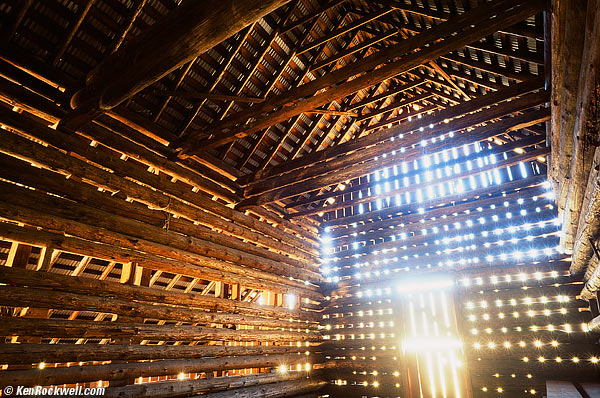
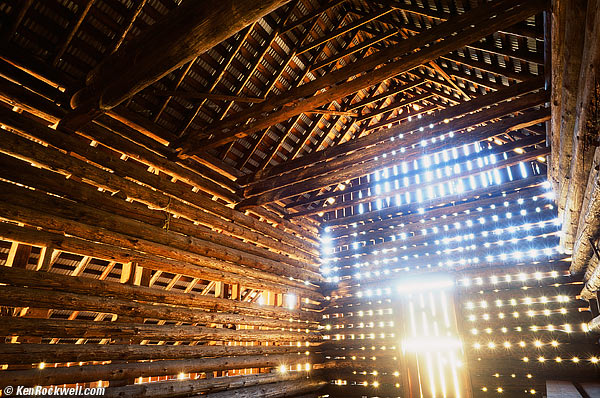
I made this shot on a Contax G2 with a 21mm Zeiss lens at f/8 on Fuji Velvia 50, which was processed and scanned at the same time at NCPS. The dynamic range is so great that the hellacious sunbursts you see are just what’s naturally coming off the diaphragm blade at f/8, as if 1,000 suns were shining in the lens in the two-minute exposure.

Not only that, but the film I shot in a Canon EOS Rebel G film camera, worth about $20 today, was sharper as scanned at NCPS than the file I made with the same lens on a Canon 5D, which is sharper still than anything on earth from Nikon digital.

How about that? A $20 camera with a $5 roll of film and $20 to process and scan the entire roll is sharper than a $5,000 camera. (The Contax cost more, but still loads less than anything in full-frame digital.)

Full Article: Why We Love Film.

The Film Festivals of New England, Part One | K. Correia @NewEnglandFilm.com

New England might be small–New England film festivals are anything but. This year, NewEnglandFilm.com has partnered with nine regional festivals that bring in films from around the world for the 4th Annual Online New England Film Fetival. In this two part series, get to know these nine festivals that call New England home.
By K. Correia

Boston International Film Festival — Boston, Massachusetts

The Boston International Film Festival (BIFF) is now heading into its 11th year. The festival was initially founded in 2002 by Patrick Jerome and his company Bway 7 productions. The festival supports films and filmmakers from around the world in an effort to help bring about a better understanding of cultural diversity. As indicated on BIFF’s website, “The festival’s goal is to encourage and support the work of worldwide independent filmmakers and to promote their products as an art concept and as a valuable contribution to world understanding.”

The ten-day festival is held each year at the AMC/Loews Theatre at Boston Common. The festival showcases feature-length and short films as well as documentary and student films. In conjunction with these screenings, BIFF offers select discussion panels, Q&A sessions with the respective filmmakers and stars, an award ceremony as well as Opening & Closing night gala parties.

The festival is now accepting submissions for the 2012-2013 season. Films selected for the festival are chosen based on the discretion of the programming staff. Awards are given out in the categories of feature film, short film, documentary film, experimental film, and animated film.

The Boston International Film Festival seeks to educate the populace about, not only the diversity of international cultures, but also the diversity of cultures at home. With a successful ten year run and film submissions that continue to grow and vary in style and genre, the BIFF shows no sign of slowing in the achievement of this goal.

Want to know more? Visit their website, and check out their NewEnglandFilm.com Festival selections: Turnaround, Taxi Cab Teranga, Cleaning House, Grudge Match, and Neighbors.
Camden International Film Festival — Camden and Rockland, Maine

The Camden International Film Festival (CIFF) is the brainchild of Maine native and Emerson College graduate Ben Fowlie. Inspired after volunteering at a film festival during college, and wanting to bring that experience to his beloved hometown of Camden, Fowlie went about developing a festival of unique and original programming that focused solely documentary films.

Having only started in 2005, the festival is already considered to be one of the top 25 festivals in the world for documentary films and filmmakers. In addition to offering Q&A sessions with filmmakers and directors and the parties/social and networking events that normally accompany the screening of festival films, the CIFF also holds musical events and Panoptic, a showcase of experimental non-narrative documentaries, shorts, and audio works.

In 2009, the CIFF introduced the Points North Documentary Forum into the festival lineup. The Forum, which lasts two days, is considered to be the conference aspect of the festival. It features informative panels comprised of, and workshops lead by, Industry delegates from foundations and organization such as the LEF Foundation, Cinereach, and Kickstarter, and production companies such as Back Allie Films and Carnivalesque Films. The forum also offers the opportunity for six filmmakers to pitch their respective projects to funders and producers, which in the past have included HBO, PBS, BBC, the Tribeca Film Institute, and the Sundance Institute among others.

Since its origins, the CIFF has been about the festival experience, the bringing together of people and story. The CIFF has summed up its own story, its mission as this: “We love a good story, and we love sharing them with our audiences. We love the intimacy that can only be found in places where “getting there” is part of the experience. Most importantly we love the intersection of art and community that can only happen in a festival setting.”

With a list of film screenings that continues to grow each year, the Camden International Film Festival is making sure that we all have the opportunity to share in this experience. This year’s festival is scheduled to take place from September 27th through September 30th

Want to know more? Visit their website, and check out their NewEnglandFilm.com Festival selection: Sanjiban.

Green Mountain Film Festival — Montpelier and St. Johnsbury, Vermont

The Green Mountain Film Festival has been a staple in northern New England for the last 15 years. The festival, which takes place during March, is presented by Focus on Film, a nonprofit organization dedicated to using film to educate and create a dialogue among the community, and to support local filmmakers. The organization’s goals, according to the festival’s website, are to provide the public with “film showings of cultural, social and historic interest, sponsor discussions of these films and provide independent filmmakers the opportunity to exhibit their work.”

This year’s festival boasted 80 films and two competitions spread out over five venues in the course of ten days. Both the Margot George Short Film Competition and the Green Mountain 48 Hour Film Slam were added to the festival in 2011. The 48 Hour Film Slam is a filmmaking competition in which teams of six or seven select a genre from a hat, and are given a prop, a line of dialogue, and a specific location which they must use to create a 10 minute film within 48 hours. The films are then viewed by both audiences and judges and awards are handed out to the top three films.

Full Article: The Film Festivals of New England, Part One via Profiles of 9 New England Film Festivals | NewEnglandFilm.com.