The Film Festivals of New England, Part One | K. Correia @NewEnglandFilm.com

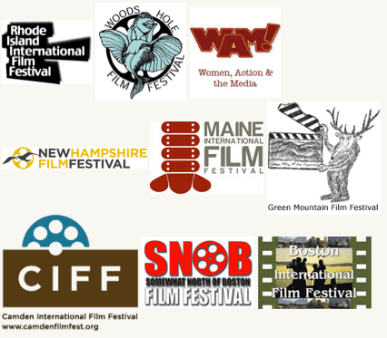
New England might be small–New England film festivals are anything but. This year, NewEnglandFilm.com has partnered with nine regional festivals that bring in films from around the world for the 4th Annual Online New England Film Fetival. In this two part series, get to know these nine festivals that call New England home.
By K. Correia

Boston International Film Festival — Boston, Massachusetts

The Boston International Film Festival (BIFF) is now heading into its 11th year. The festival was initially founded in 2002 by Patrick Jerome and his company Bway 7 productions. The festival supports films and filmmakers from around the world in an effort to help bring about a better understanding of cultural diversity. As indicated on BIFF’s website, “The festival’s goal is to encourage and support the work of worldwide independent filmmakers and to promote their products as an art concept and as a valuable contribution to world understanding.”

The ten-day festival is held each year at the AMC/Loews Theatre at Boston Common. The festival showcases feature-length and short films as well as documentary and student films. In conjunction with these screenings, BIFF offers select discussion panels, Q&A sessions with the respective filmmakers and stars, an award ceremony as well as Opening & Closing night gala parties.

The festival is now accepting submissions for the 2012-2013 season. Films selected for the festival are chosen based on the discretion of the programming staff. Awards are given out in the categories of feature film, short film, documentary film, experimental film, and animated film.

The Boston International Film Festival seeks to educate the populace about, not only the diversity of international cultures, but also the diversity of cultures at home. With a successful ten year run and film submissions that continue to grow and vary in style and genre, the BIFF shows no sign of slowing in the achievement of this goal.

Want to know more? Visit their website, and check out their NewEnglandFilm.com Festival selections: Turnaround, Taxi Cab Teranga, Cleaning House, Grudge Match, and Neighbors.
Camden International Film Festival — Camden and Rockland, Maine

The Camden International Film Festival (CIFF) is the brainchild of Maine native and Emerson College graduate Ben Fowlie. Inspired after volunteering at a film festival during college, and wanting to bring that experience to his beloved hometown of Camden, Fowlie went about developing a festival of unique and original programming that focused solely documentary films.

Having only started in 2005, the festival is already considered to be one of the top 25 festivals in the world for documentary films and filmmakers. In addition to offering Q&A sessions with filmmakers and directors and the parties/social and networking events that normally accompany the screening of festival films, the CIFF also holds musical events and Panoptic, a showcase of experimental non-narrative documentaries, shorts, and audio works.

In 2009, the CIFF introduced the Points North Documentary Forum into the festival lineup. The Forum, which lasts two days, is considered to be the conference aspect of the festival. It features informative panels comprised of, and workshops lead by, Industry delegates from foundations and organization such as the LEF Foundation, Cinereach, and Kickstarter, and production companies such as Back Allie Films and Carnivalesque Films. The forum also offers the opportunity for six filmmakers to pitch their respective projects to funders and producers, which in the past have included HBO, PBS, BBC, the Tribeca Film Institute, and the Sundance Institute among others.

Since its origins, the CIFF has been about the festival experience, the bringing together of people and story. The CIFF has summed up its own story, its mission as this: “We love a good story, and we love sharing them with our audiences. We love the intimacy that can only be found in places where “getting there” is part of the experience. Most importantly we love the intersection of art and community that can only happen in a festival setting.”

With a list of film screenings that continues to grow each year, the Camden International Film Festival is making sure that we all have the opportunity to share in this experience. This year’s festival is scheduled to take place from September 27th through September 30th

Want to know more? Visit their website, and check out their NewEnglandFilm.com Festival selection: Sanjiban.

Green Mountain Film Festival — Montpelier and St. Johnsbury, Vermont

The Green Mountain Film Festival has been a staple in northern New England for the last 15 years. The festival, which takes place during March, is presented by Focus on Film, a nonprofit organization dedicated to using film to educate and create a dialogue among the community, and to support local filmmakers. The organization’s goals, according to the festival’s website, are to provide the public with “film showings of cultural, social and historic interest, sponsor discussions of these films and provide independent filmmakers the opportunity to exhibit their work.”

This year’s festival boasted 80 films and two competitions spread out over five venues in the course of ten days. Both the Margot George Short Film Competition and the Green Mountain 48 Hour Film Slam were added to the festival in 2011. The 48 Hour Film Slam is a filmmaking competition in which teams of six or seven select a genre from a hat, and are given a prop, a line of dialogue, and a specific location which they must use to create a 10 minute film within 48 hours. The films are then viewed by both audiences and judges and awards are handed out to the top three films.

Full Article: The Film Festivals of New England, Part One via Profiles of 9 New England Film Festivals | NewEnglandFilm.com.
~

murathefilm's avatarMURA

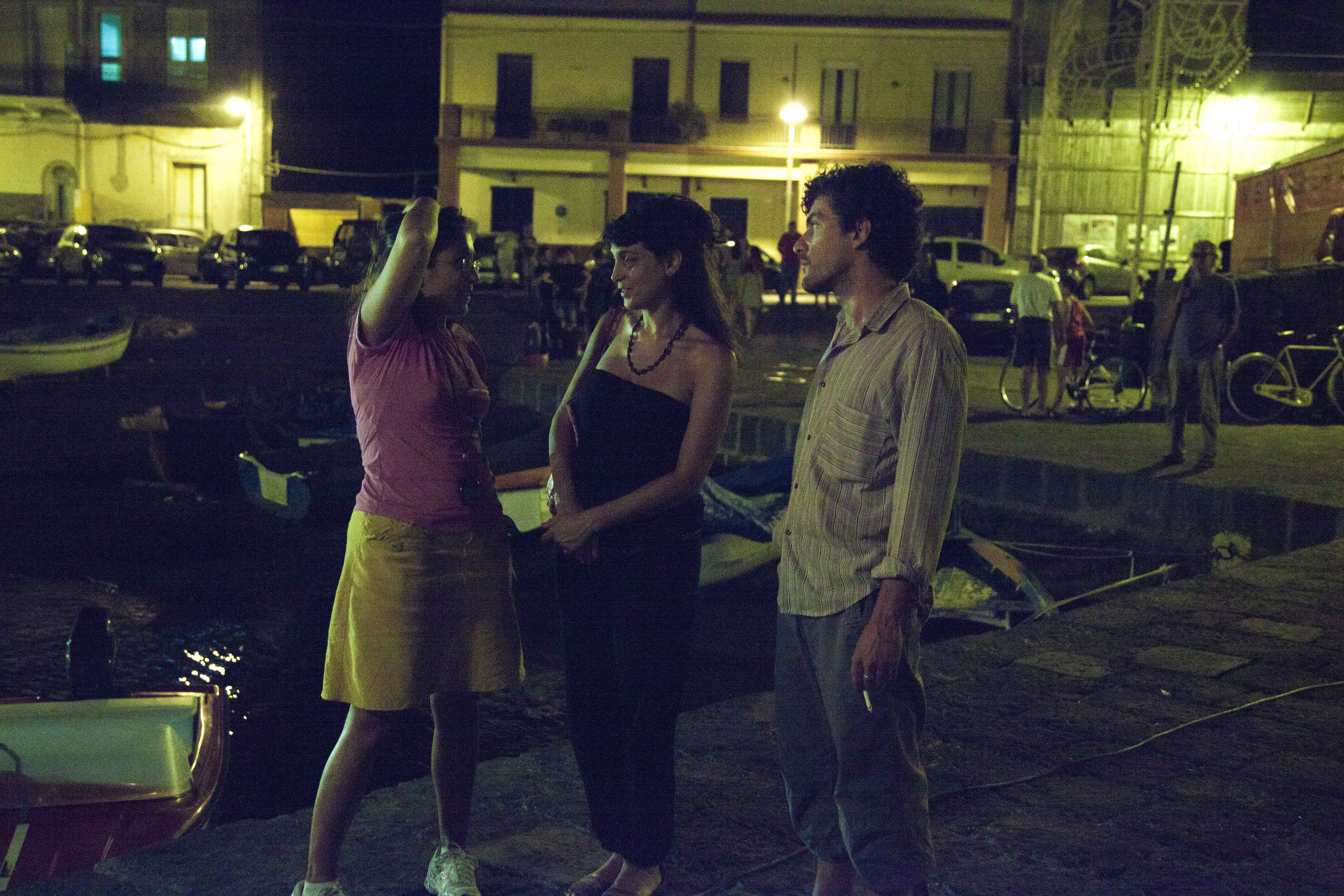
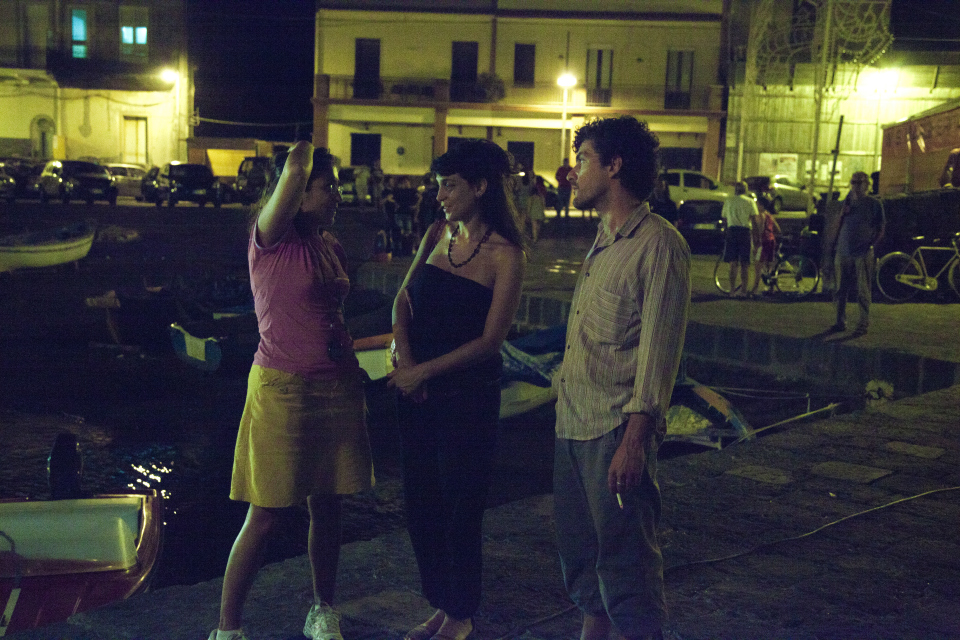
Donatella Finocchiaro con il compagno in visita a Pozzillo (CT) sul set di Mura.

Donatella Finocchiaro, con il compagno a Pozzillo (CT) sul set di “Mura”, ha salutato i suoi amici Lisa Castagna, continuity supervisor, e Franz Cantalupo, protagonista di “Mura”. Dopo essersi complimentata per il progetto ha augurato buon lavoro al regista e a tutta la troupe.

View original post

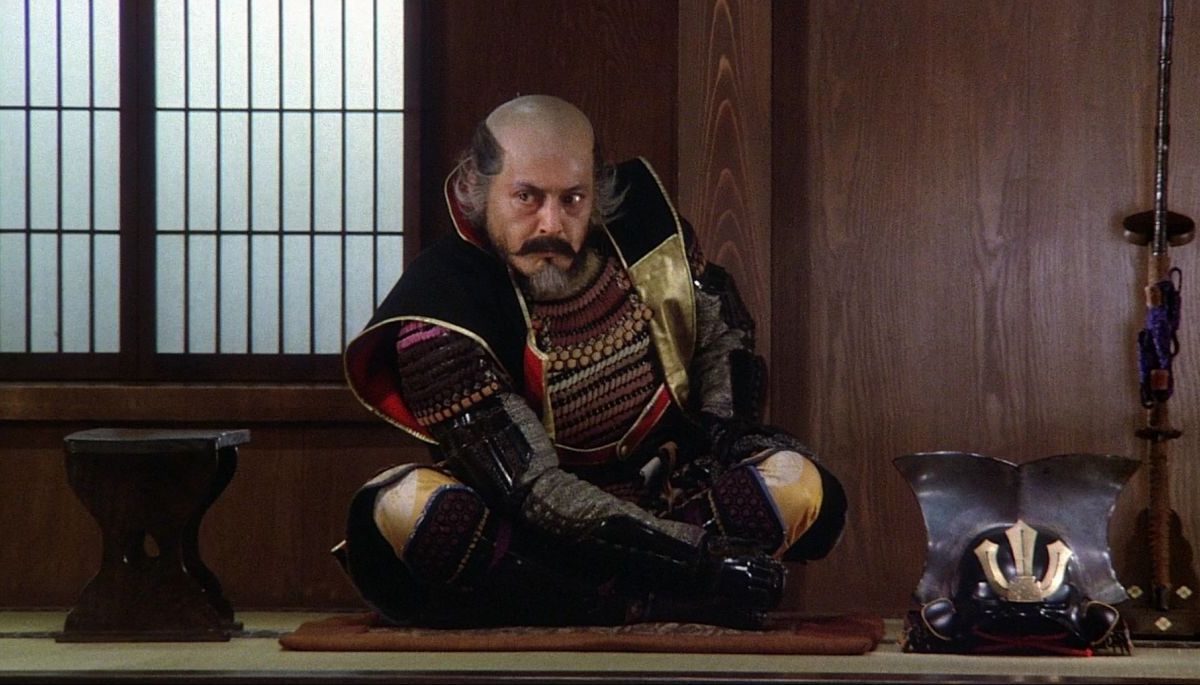
Kagemusha (The Shadow Warrior) trailer | Dir. Akira Kurosawa

In his late color masterpiece “Kagemusha (The Shadow Warrior),” director Akira Kurosawa returned to the samurai film and to a primary theme of his celebrated career-the play between illusion and reality. Sumptuously reconstructing the splendor of feudal Japan and the pageantry of war, Kurosawa creates a soaring historical epic that is also a somber meditation on the nature of power. Criterion is proud to present Kagemusha for the first time in its full-length, three-hour original version.

A Guide to Feature Film Opening Credits | Peter Bohush | NewEnglandFilm.com

By Peter Bohush

With a hundred years of moviemaking history, there must be a “standard” way of listing people in the opening credits, right? Wrong. Except for the contractual or union-mandated billing, the rest of the opening credits have no rules.

Many great movies had no opening credits, such as The Godfather and Apocalypse Now. Citizen Kane opens with only the title of the movie, saving all the credits for the end.

Most movies in the 1930s through 1950s listed lots of cast and crew in the opening credits, often in a sort of Playbill format as if the movie was a filmed stage play. Today, high-powered talent demand specific types of onscreen billing in their contracts.

Although it’s common today for blockbuster movies to open with just the title and no other front credits, it is reported that George Lucas was fined $250,000 by the Directors Guild of America for not putting the director’s name (his) in the opening credits.

Independent, non-union movies aren’t bound by union rules for opening credits, so anything goes. However, over the past two decades an order of listing cast and crew has become widely accepted by Hollywood studio and independent productions.

When the lights dim and the movie begins, the opening credits will be presented in the following manner:

STUDIO OR DISTRIBUTION COMPANY presents

This is the distributor. It may be a studio or independent distribution company. It may or may not have financed the making of the movie. But it is the company that sold the movie into theaters, television, DVD, etc. Sometimes it is listed in the same text as the rest of the credits. Or it could be a logo or even a standalone clip, such as the MGM lion roaring.

THE PRODUCTION COMPANY

Usually a movie is produced under a business entity that finances motion pictures. It may be an independent company, a studio or a subsidiary. The director or producer’s personal production company may also have acquired the source material, such as a book or play, upon which the movie is based, and could get a production company credit here as well.

Full Article: A Guide to Feature Film Opening Credits | NewEnglandFilm.com.

Source: Peter Bohush @ NewEnglandFilm.com

Information for Locals | Massachusetts Film Office

As we all know, the growth and vitality of the local filmmaking community is essential to the long-term goal of being a sustainable production center rather than just a distant location. The Massachusetts Film Office is dedicated to finding new ways to support “our own” and welcomes ideas for expanding the already robust industry.

More…http://www.mafilm.org/

Irish Film & TV Research Online | Trinity College Dublin

Irish Film & TV Research Online is a website designed to bring together the wide diversity of research material relating to Irish-made cinema and television as well as to Irish-themed audio-visual representations produced outside of Ireland. It incorporates three searchable databases: Irish Film & Television Index; Irish Film & Television Biographies; and Irish Film & Television Bibliography; and the Irish Postgraduate Film Research Seminar, an annual conference of film studies’ postgraduate students based in Ireland or engaged in researching Irish material elsewhere. The project is based in the School of Drama, Film and Music, Trinity College Dublin.

The impetus for the Irish Film & Television Index was Kevin Rockett’s The Irish Filmography: Fiction Films 1896 – 1996 (1996), which documented all fiction films made in Ireland and about Ireland and the Irish produced worldwide since the beginnings of cinema. Under the Irish Research Council for the Humanities and Social Sciences’ Major Grant Scheme, 2003-05, funding was awarded to update the original filmography and to document, with the same worldwide remit, all major non-fiction films, including newsreels, and animation, made for cinema and television. In addition to the IRCHSS, the other sponsors of the project are Trinity College Dublin; the Higher Education Authority’s North South Programme for Collaborative Research, 2003-06; and Bord Scannán na héireann/Irish Film Board, 2006.

Since 2003, filmographer and archivist Eugene Finn has been expanding the database which, incorporating the original Irish Filmography, has drawn on the archival and paper records of many of the world’s leading film archives and specialist libraries, including ones in Ireland, Britain, the USA, and Australia. We are especially grateful for the on-going support we receive from the Irish Film Institute’s archive and library. At present the Irish Film & Television Index has almost 40,000 titles, while new entries will be added in an on-going way.

The two complementary databases covering biographies and bibliography which are still in the early stages of development will be expanded over time. In addition, the ambition is to use the website as a publishing outlet for new research, as well as for out-of-print publications and archival documents, including, it is hoped, the extensive records of Ireland’s film censors.

While the website will need on-going editorial maintenance and development, its value for researchers, whether academic, from within the film industry, or the general public, is in its easy packaging of information concerning Irish-made or Irish-themed audio-visual material. In many cases, such information may have been gathered from numerous sources both within Ireland and elsewhere. Using the searchable fields, a researcher can almost instantly find a particular film, its cast list or production personnel, read a synopsis of its content, establish where a copy of it might be held, what has been written about it, identify a list of complementary titles through a keyword search, or, using the biographical database, access further information on cast and crew.

As a living archive, we would encourage feedback and invite online visitors to contribute to the development of the project by sending us information, additions and amendments.

More…Irish Film & TV Research Online – Trinity College Dublin.

State Controlled Consciousness | John Taylor Gatto interview | Dir. Lennart Mogren

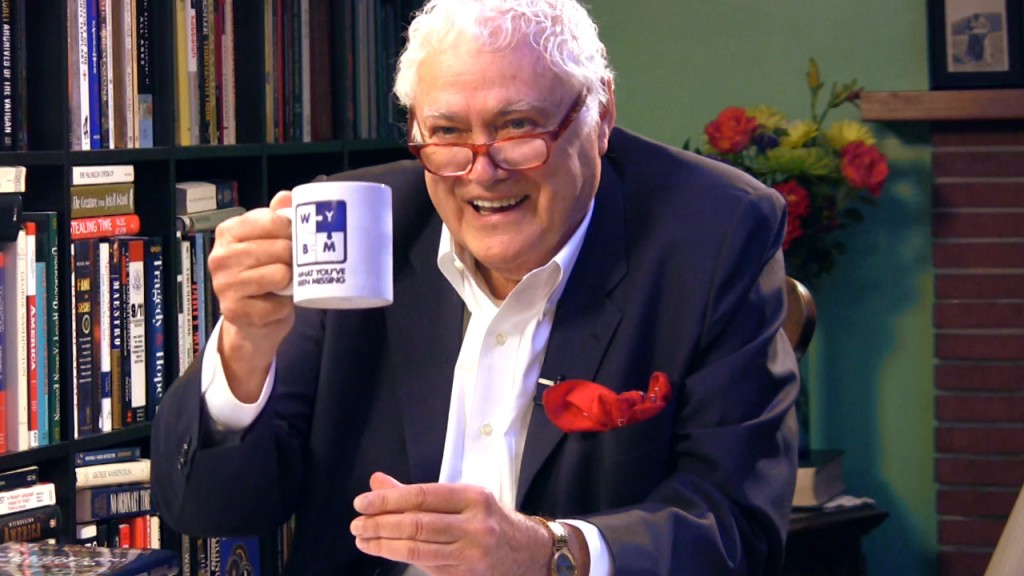
Gatto1-1024x576

John Taylor Gatto is an American retired school teacher of 29 years 8 months and author of several books on education.

He is an activist critical of compulsory schooling and the hegemonic nature of discourse on education and the education professions.

Excerpt from an interview by the Swedish teacher Lennart Mogren ( http://www.slutaskolan.nu ).

Watch the whole interview here:

http://www.youtube.com/watch?v=dYtTRR1cTK0