
Revisit: American Citizens Step Up to Rebuild | The Appalachian Channel | John Ward

Jake at Precision Grading is still at it over seven months later at no charge to people in need of help. We still post updates on our facebook page every day. Thanks for reposting this. The need is still very much a reality here in our area and we are grateful for the support of this community.

Or you can Make a Check Payable to “Precision Grading” or “Jake Jarvis” The Appalachian Channel c/o Shannon Brookshire P.O. Box 428 Saluda, NC 28773

From John Ward
This video is a look back at one of my favorite videos, which was first posted six months ago. I thought I would do a replay for those who didn’t get a chance to watch it. I’m currently looking for anyone who received a FMEA Trailer for a new video that I’m working on. Thanks for watching The Appalachian Channel with John Ward If you would like to support the Appalachian Channels, use the link below. https://www.paypal.com/ncp/payment/TX… contact me at – johngward1472@gmail.com John Ward 312 Beverly Hills Ln LaFollette TN 37766

Follow John Ward at The Appalachian Channel with John Ward for more information, in the aftermath of Hurricane Helene.


 

When Government fails, American Citizens Step Up to Rebuild | The Appalachian Channel | John Ward

To support Jake by Gofundme click this link https://gofund.me/91a1d7ec

Or you can Make a Check Payable to “Precision Grading” or “Jake Jarvis” The Appalachian Channel c/o Shannon Brookshire P.O. Box 428 Saluda, NC 28773

Follow John Ward at The Appalachian Channel with John Ward for more information, in the aftermath of Hurricane Helene.
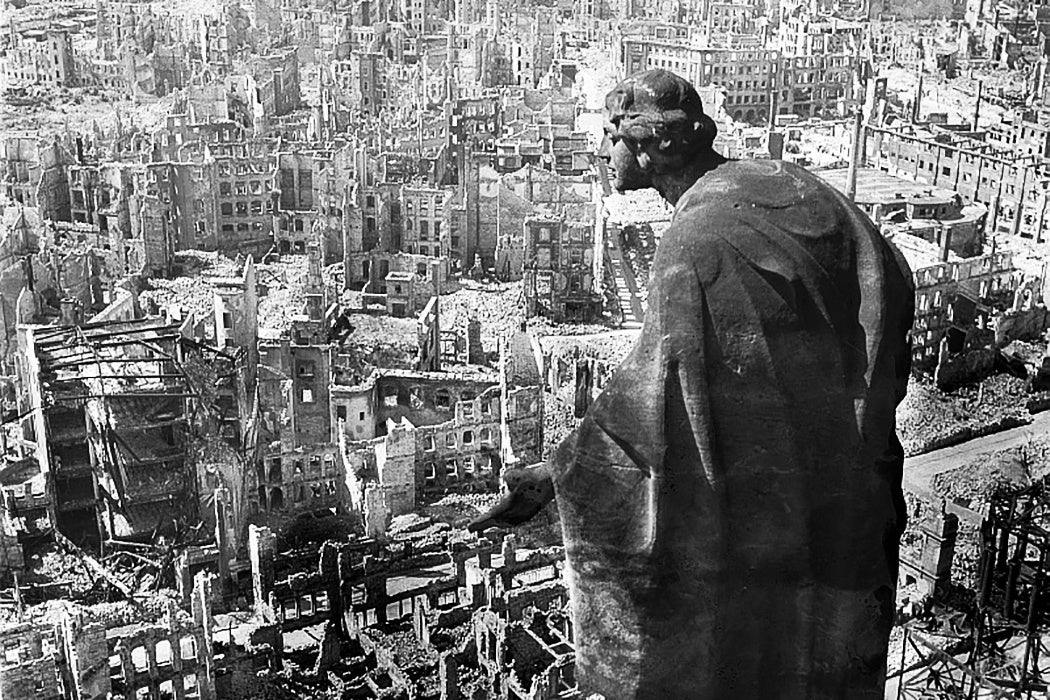
 

How Slaughterhouse-Five Made Us See the Dresden Bombing Differently | Peter Feuerherd

The bombing of Dresden, Germany, which began February 13, 1945, was once viewed as a historical footnote. Until Slaughterhouse-Five was published.

The American and British bombing of Dresden, Germany, which began February 13, 1945, was once viewed as an historical footnote to a much-wider story. After all, it took place near the end of World War II, a war characterized by atrocities too numerous to count.

Then came the 1969 publication of a science fiction novel called Slaughterhouse-Five by Kurt Vonnegut, Jr. He had witnessed the bombing as an American POW, and survived by taking shelter in a meat locker in the historic German city. The novel tells the story of Billy Pilgrim, also an American POW in Dresden, who time travels through space and comments on barbarity with the understated mantra of “So It Goes.”

An illustration from Kurt Vonnegut's "Slaughterhouse-Five"
An illustration by Vonnegut from Slaughterhouse-Five        (via Flickr user Mike Schroeder)

The novel became Vonnegut’s iconic work, selling more than 800,000 copies in the U.S. It was widely translated. Slaughterhouse-Five was read widely as a graphic statement on the futility of war, capturing the zeitgeist of the time, when anti-Vietnam War protests were at their zenith.

“All this happened, more or less,” is how Vonnegut introduces the novel.

Vonnegut’s novel re-opened an old wound: Was the Dresden bombing morally justified? Was it simply an act of vengeance for Nazi crimes, inflicted upon innocent civilians? Or was it necessary to bring the war in Europe to a close?

In the novel, Vonnegut describes Billy Pilgrim as witnessing the worst act of mass violence in European history, comparable to the atomic bombing of Hiroshima. Citing a widely-published history of the time, he put the Dresden fatalities at 125,000.


the rest of the article by Peter Feuerherd is here

more about Kurt Vonnegut is  https://www.vonnegutlibrary.org/biography/