The American Revolution 250 years on…

At one time, the people of these United States lived at the behest of a monarch. Many might argue that we never left that construct or even worse, have allowed a pseudo monarchy to return. I might agree.

250 years later we remember those courageous men and women who fought and died for the freedom and independence we enjoy today but are in ever greater danger of losing.

Hopefully, we peoples of these United States will once again become as courageous in bringing these united states back to the fundamentals in was founded upon. lb
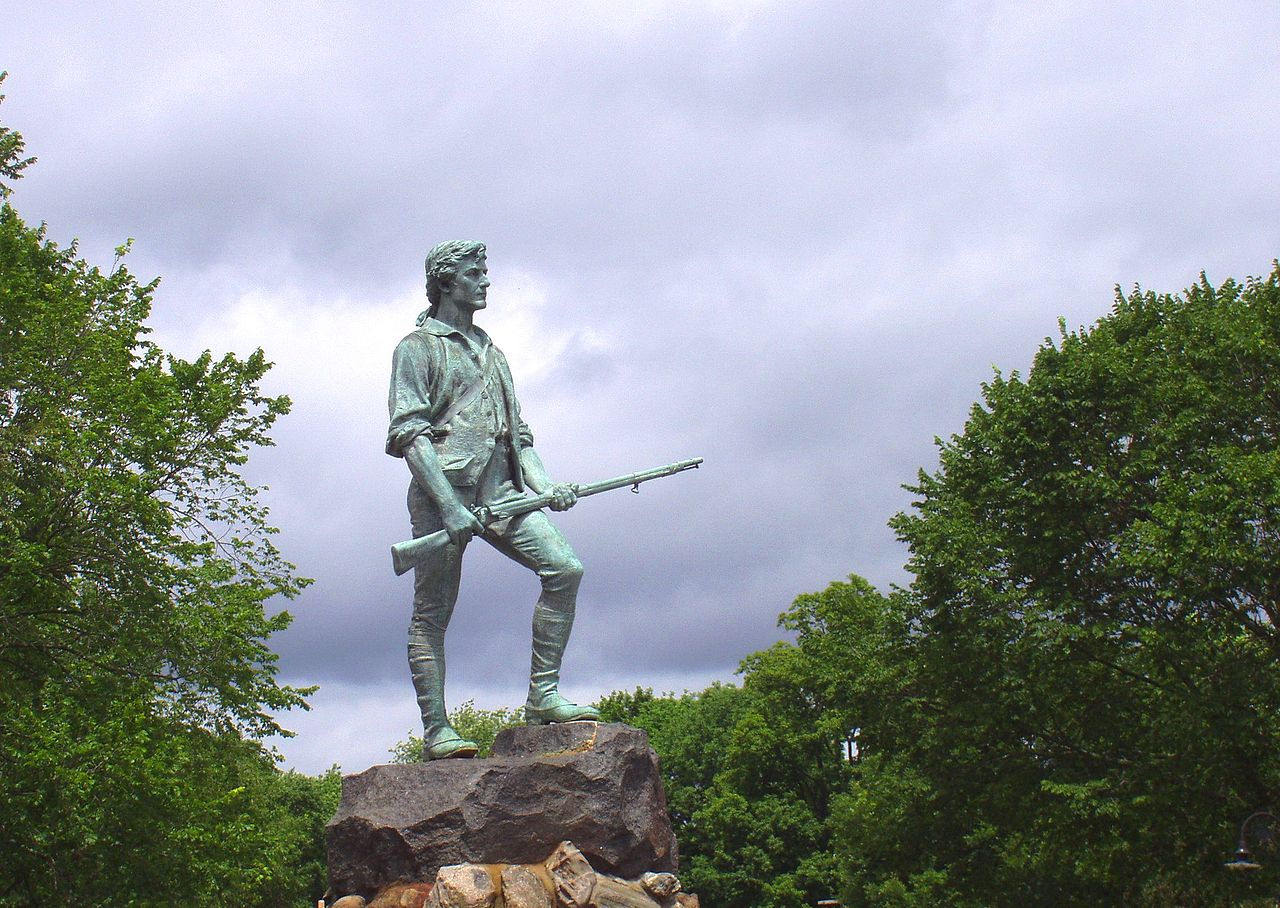
1280px-Minute_Man_Statue_Lexington_Massachusetts
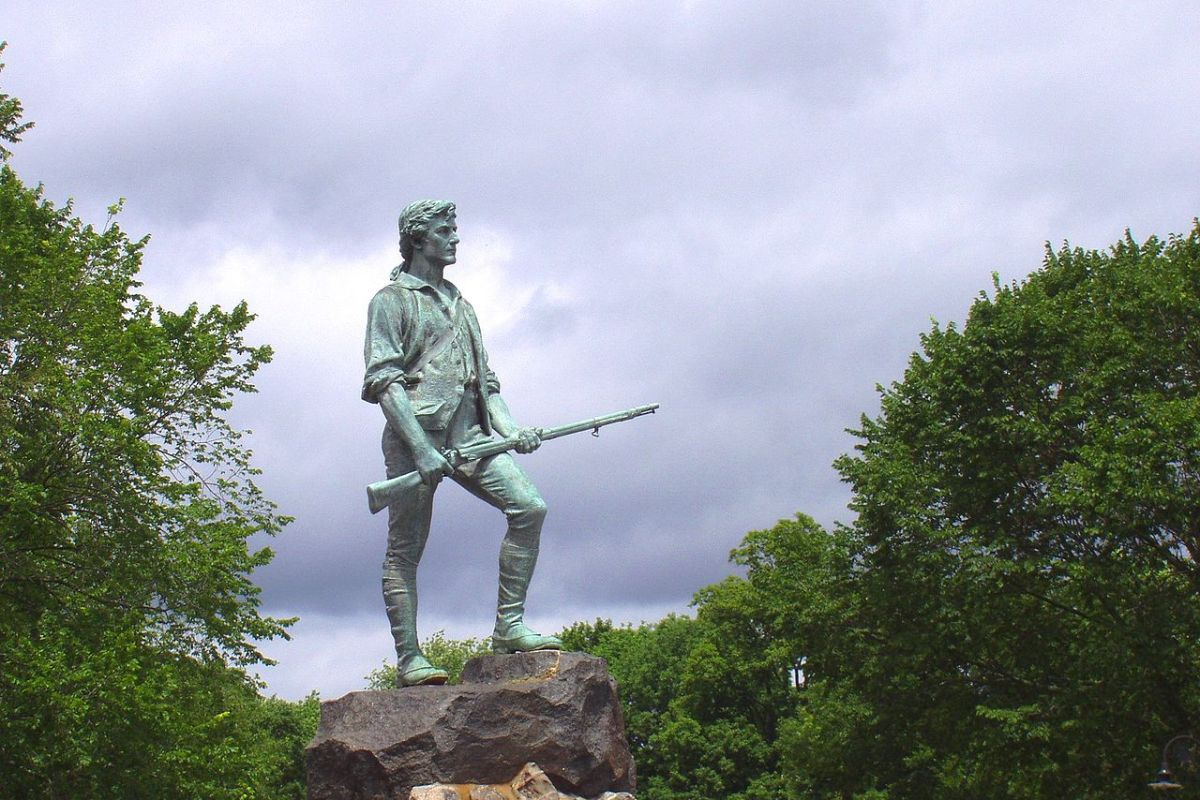
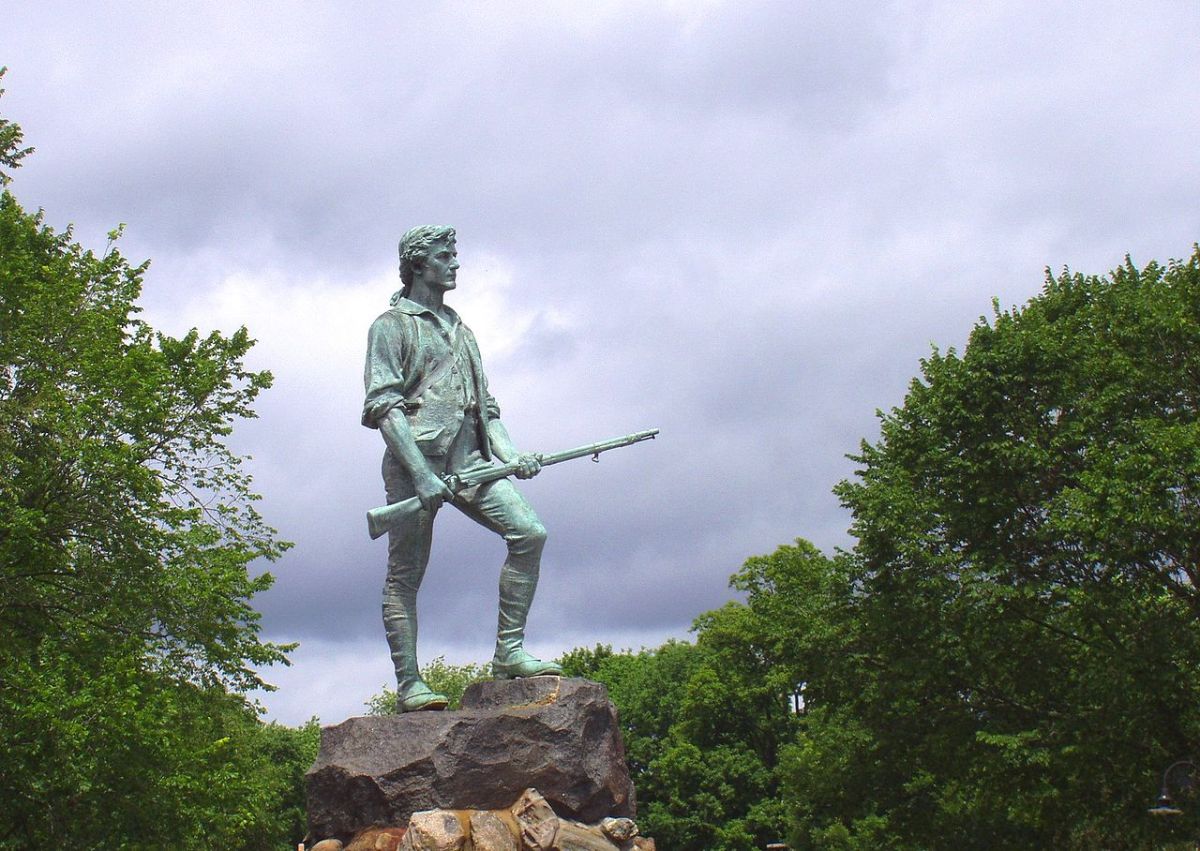
This statue known as The Lexington Minuteman is commonly believed to depict Captain John Parker. It is by Henry Hudson Kitson

At about 5 a.m., 700 British troops, on a mission to capture Patriot leaders and seize a Patriot arsenal, march into Lexington to find 77 armed minutemen under Captain John Parker waiting for them on the town’s common green. British Major John Pitcairn ordered the outnumbered Patriots to disperse, and after a moment’s hesitation the Americans began to drift off the green. Suddenly, the “shot heard around the world” was fired from an undetermined gun, and a cloud of musket smoke soon covered the green. When the brief Battle of Lexington ended, eight Americans lay dead or dying and 10 others were wounded. Only one British soldier was injured, but the American Revolution had begun.

By 1775, tensions between the American colonies and the British government approached the breaking point, especially in Massachusetts, where Patriot leaders formed a shadow revolutionary government and trained militias to prepare for armed conflict with the British troops occupying Boston. In the spring of 1775, General Thomas Gage, the British governor of Massachusetts, received instructions from England to seize all stores of weapons and gunpowder accessible to the American insurgents. On April 18, he ordered British troops to march against the Patriot arsenal at Concord and capture Patriot leaders Samuel Adams and John Hancock, known to be hiding at Lexington.
Minute_Man
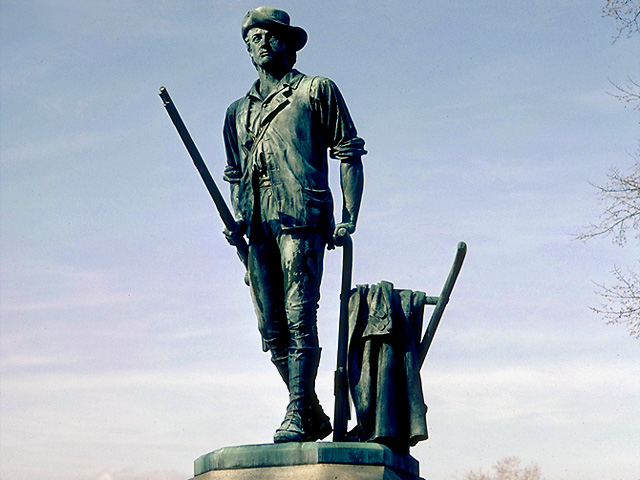
The Minute Man, statue by Daniel Chester French, at the Old North Bridge, Concord, Massachusetts.

The Boston Patriots had been preparing for such a military action by the British for some time, and upon learning of the British plan, Patriots Paul Revere and William Dawes were ordered to set out to rouse the militiamen and warn Adams and Hancock. When the British troops arrived at Lexington, Adams, Hancock, and Revere had already fled to Philadelphia, and a group of militiamen were waiting. The Patriots were routed within minutes, but warfare had begun, leading to calls to arms across the Massachusetts countryside.

When the British troops reached Concord at about 7 a.m., they found themselves encircled by hundreds of armed Patriots. They managed to destroy the military supplies the Americans had collected but were soon advanced against by a gang of minutemen, who inflicted numerous casualties. Lieutenant Colonel Frances Smith, the overall commander of the British force, ordered his men to return to Boston without directly engaging the Americans. As the British retraced their 16-mile journey, their lines were constantly beset by Patriot marksmen firing at them Indian-style from behind trees, rocks, and stone walls. At Lexington, Captain Parker’s militia had its revenge, killing several British soldiers as the Red Coats hastily marched through his town. By the time the British finally reached the safety of Boston, nearly 300 British soldiers had been killed, wounded, or were missing in action. The Patriots suffered fewer than 100 casualties.

The battles of Lexington and Concord were the first battles of the American Revolution, a conflict that would escalate from a colonial uprising into a world war that, seven years later, would give birth to the independent United States of America. from History.com
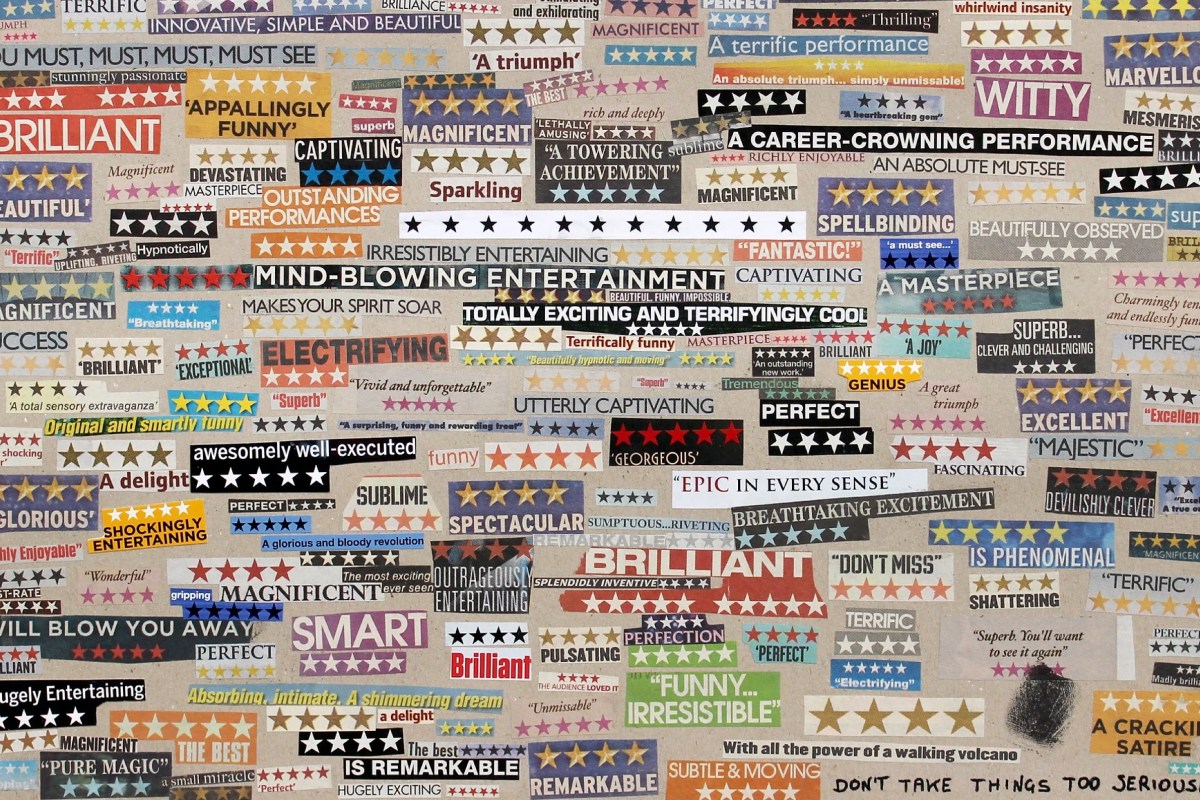
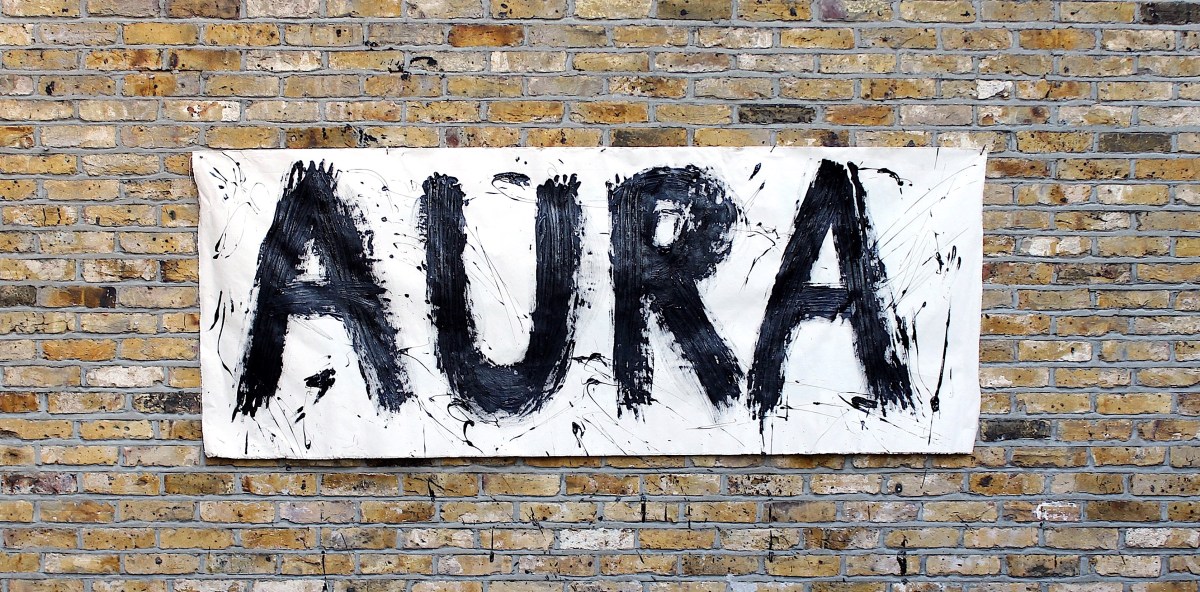
Reminder : Deadline June 8th, 2024 – 2024 IMPREINT artist collective “Call for Submissions” – Photography / All Are Welcome! | London

Reminder : Send your hi-res photograpy to info@impreint.com, deadline 08/06/2024, submissions might close in advance due to the high number of participants.
Andrea at IMPREINT, in London, asked me to share this information with all of you and encourage you to submit entries. thanks leo
Follow the links of the international exhibitions planned for 2024 below.
photography:
Feel free to involve other artists. Events are financed entirely by us with no cost for submission. We will also support initiatives in case you or someone would like to create events presenting the collective video following the London opening, where the video will be presented to the public.
Please keep uniformity in the promotion of the exhibitions on socials by using the links above and the pictures attached. Here’s also a page created on instagram for the events where you can see how we posted
and here facebook
Please don’t forget to use yours and the following tags when you share the events #impreintspace #impreint
For any further questions, don’t hesitate to contact us.
Kind regards, IMPREINT – Andrea

2024 IMPREINT artist collective “Call for Submissions” – Photography and Painting / All Are Welcome! | London

Andrea at IMPREINT, in London, asked me to share this information with all of you and encourage you to submit entries. thanks leo
Follow the links of the international exhibitions planned for 2024 below.
paintings:
photography:
Feel free to involve other artists. Events are financed entirely by us with no cost for submission. We will also support initiatives in case you or someone would like to create events presenting the collective video following the London opening, where the video will be presented to the public.
Please keep uniformity in the promotion of the exhibitions on socials by using the links above and the pictures attached. Here’s also a page created on instagram for the events where you can see how we posted
and here facebook
Please don’t forget to use yours and the following tags when you share the events #impreintspace #impreint
For any further questions, don’t hesitate to contact us.
Kind regards, IMPREINT – Andrea

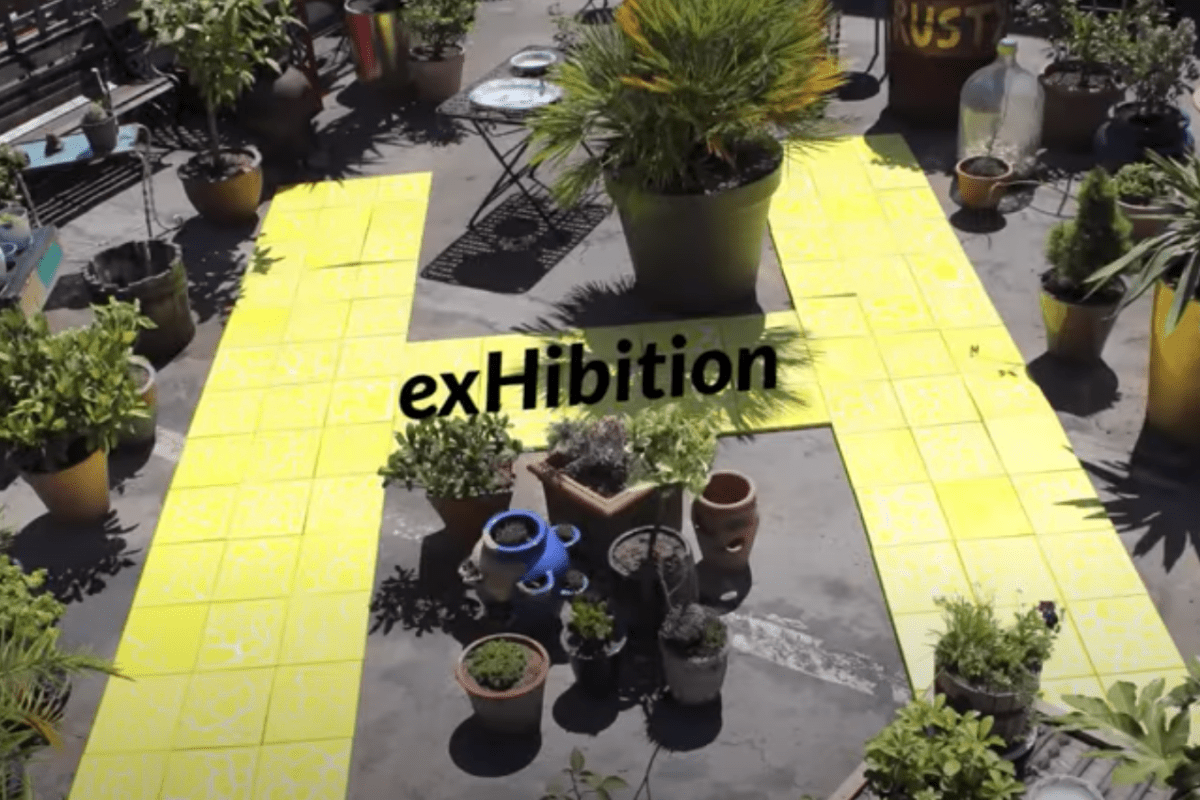
exHibition | artist collective | IMPREINT, London

I DON’T KNOW WHAT YOU SEE | artist collective

coming up …

Photography – entry deadline – 5th of October

IMPREINT is organising an artist collective (photography), deadline 5th of October, 1 photo each participant. Main event 15th of October in London.
If you find it interesting and would like to participate, just send IMPREINT the picture that you choose to represent you in the video collective (see link below) to info@impreint.com and also upload it using the facebook link in the comments, like the other participants.

Link Event
Link Facebook
Video precedent collective in case you would like to have a look
Kind regards, IMPREINT

exHibition | artist collective

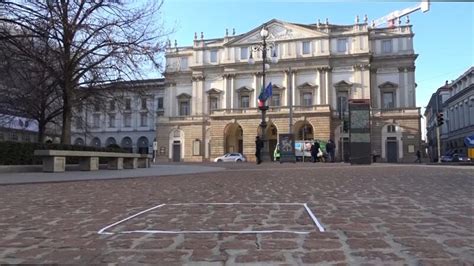
BUDDHA IN CONTEMPLAZIONE, la scultura che non si vede, piazza della Scala, Milano Salvatore Garau ;-)

“BUDDHA IN CONTEMPLAZIONE” la scultura che non si vede.

di Salvatore Garau

piazza della Scala, Milano. gennaio 2021

musica e riprese NICOLA URRU

editing SALVATORE GARAU, NICOLA URRU

tenore BERNARD RICHTER (mare, lirica di Laurent Gerber)

coro POLIFONICA ARBORENSE, ORISTANO, Adoramus Te di Gasparini

Ufficio Stampa di Salvatore Garau

http://www.deangelispress.com

La scultura che ho installato qui davanti, sopra il quadrato bianco, s’intitola “Buddha in contemplazione”. Non la vedete ma esiste; è fatta di aria e di spirito.

È un’opera che vi chiede di attivare il potere dell’immaginazione, un potere che ha chiunque, anche chi non crede di averlo.

Come la musica, il canto o la preghiera ci aiutano a vedere ciò che non vediamo, così anche solo un titolo è sufficiente per farci vedere e percepire un’esistenza.

Non importa che sia visibile o non visibile, questa forma generata col pensiero adesso è qui, sopra il quadrato bianco, 25 metri esatti davanti all’ingresso delle Gallerie d’Italia di Piazza della Scala a Milano.

Ormai esiste e resterà in questo spazio per sempre.

Salvatore Garau

BUDDHA IN CONTEMPLATION

The sculpture I installed in front here, above the white square space, is titled “Buddha in contemplation”. You do not see it but it exists; it is made of air and spirit.

It is a work that asks you to activate the power of imagination, a power that anyone has, even those who don’t think they have it.

Just as music, songs or prayers help us to see what we do not see, so even a title feeling is enough to make us view and perceive an existence.

It doesn’t matter whether it is visible or not, this form generated by thought is here now, above the white square space, exactly 25 meters in front of the entrance to the Gallerie d’Italia di Piazza della Scala in Milano city, Italy,

Now it exists and will remain in this space forever.

Salvatore Garau

Patriot’s Day | The Shot heard ’round the world | The American Revolution continues … | 2020

At one time, the people of these United States lived at the behest of a monarch. Many might argue that we never left that construct or even worse, have allowed a pseudo monarchy to return. I might agree.

245 years later we remember those courageous men and women who fought and died for the freedom and independence we enjoy today but are in ever greater danger of losing.

Hopefully, we peoples of these united states will once again become as courageous in bringing these united states back to the fundamentals in was founded upon. lb

1280px-Minute_Man_Statue_Lexington_Massachusetts
This statue known as The Lexington Minuteman is commonly believed to depict Captain John Parker. It is by Henry Hudson Kitson

At about 5 a.m., 700 British troops, on a mission to capture Patriot leaders and seize a Patriot arsenal, march into Lexington to find 77 armed minutemen under Captain John Parker waiting for them on the town’s common green. British Major John Pitcairn ordered the outnumbered Patriots to disperse, and after a moment’s hesitation the Americans began to drift off the green. Suddenly, the “shot heard around the world” was fired from an undetermined gun, and a cloud of musket smoke soon covered the green. When the brief Battle of Lexington ended, eight Americans lay dead or dying and 10 others were wounded. Only one British soldier was injured, but the American Revolution had begun.

By 1775, tensions between the American colonies and the British government approached the breaking point, especially in Massachusetts, where Patriot leaders formed a shadow revolutionary government and trained militias to prepare for armed conflict with the British troops occupying Boston. In the spring of 1775, General Thomas Gage, the British governor of Massachusetts, received instructions from England to seize all stores of weapons and gunpowder accessible to the American insurgents. On April 18, he ordered British troops to march against the Patriot arsenal at Concord and capture Patriot leaders Samuel Adams and John Hancock, known to be hiding at Lexington.

Minute_Man
The Minute Man, statue by Daniel Chester French, at the Old North Bridge, Concord, Massachusetts.

The Boston Patriots had been preparing for such a military action by the British for some time, and upon learning of the British plan, Patriots Paul Revere and William Dawes were ordered to set out to rouse the militiamen and warn Adams and Hancock. When the British troops arrived at Lexington, Adams, Hancock, and Revere had already fled to Philadelphia, and a group of militiamen were waiting. The Patriots were routed within minutes, but warfare had begun, leading to calls to arms across the Massachusetts countryside.

When the British troops reached Concord at about 7 a.m., they found themselves encircled by hundreds of armed Patriots. They managed to destroy the military supplies the Americans had collected but were soon advanced against by a gang of minutemen, who inflicted numerous casualties. Lieutenant Colonel Frances Smith, the overall commander of the British force, ordered his men to return to Boston without directly engaging the Americans. As the British retraced their 16-mile journey, their lines were constantly beset by Patriot marksmen firing at them Indian-style from behind trees, rocks, and stone walls. At Lexington, Captain Parker’s militia had its revenge, killing several British soldiers as the Red Coats hastily marched through his town. By the time the British finally reached the safety of Boston, nearly 300 British soldiers had been killed, wounded, or were missing in action. The Patriots suffered fewer than 100 casualties.

The battles of Lexington and Concord were the first battles of the American Revolution, a conflict that would escalate from a colonial uprising into a world war that, seven years later, would give birth to the independent United States of America. from History.com
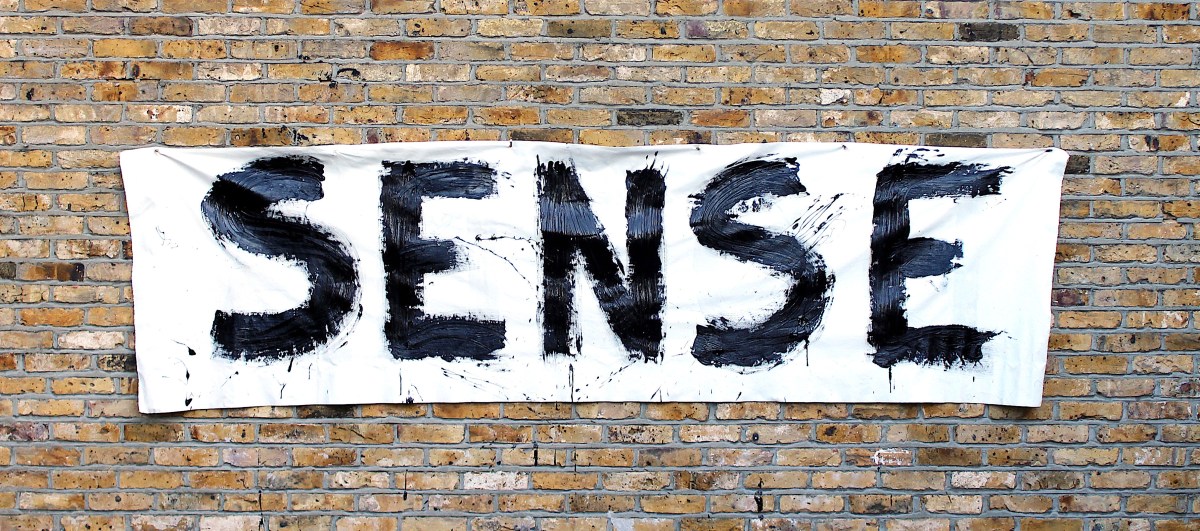
Zeit im Atelier … | Time in the studio … | Roswitha Geisler

wholelottarosie's avatarSkizzenbuch/Blog

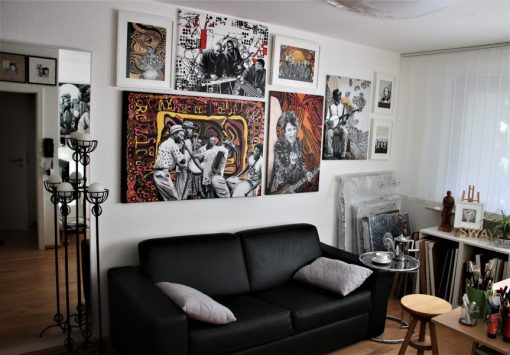
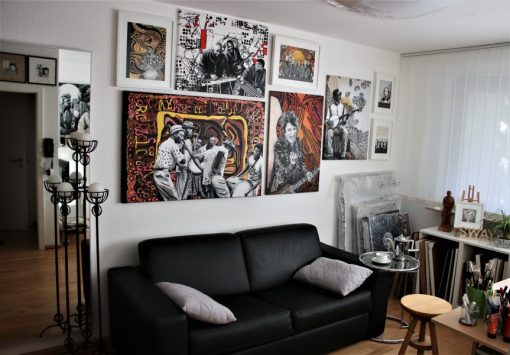
Die Ostwand meines Ateliers lädt nicht nur zum Relaxen ein, sondern auch zum Schauen …

Sein kleines Glück kann man überall entdecken.
Wie schön, wenn man einen Platz hat, an dem man in immer wieder neue, spannende Abenteuer abtauchen kann und dabei ein kleines Stückchen Paradies findet, während sich die Welt draußen weiter dreht.

View original post 214 more words

Artifacts from the Archives | Edward Gorey Museum | Yarmouthport, MA

Our 2016 Exhibit
Title-with-Artist-web

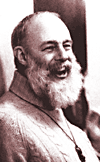
edwardsmilingAuthor and artist EDWARD ST. JOHN GOREY (1925-2000) was a child prodigy, drawing pictures at the age of two, and teaching himself to read by the age of three. Excelling at school, he skipped some early years, arriving at Chicago’s legendary Francis Parker School in the ninth grade. He emerged there as an exceptional student, contributing to many school events, exhibiting in the annual art shows, appearing in school publications and even in Chicago newspapers. Approaching graduation, he had the highest regional scores on college boards and received scholarships to Harvard and other academic institutions. After graduation from Francis Parker, with pending draft notices at the age of 17, Gorey enrolled for some art courses at the Art Institute of Chicago before entering the U.S. Army. He served during World War II from 1943 until after the end of the war—primarily at the Dugway Proving Grounds in Utah.
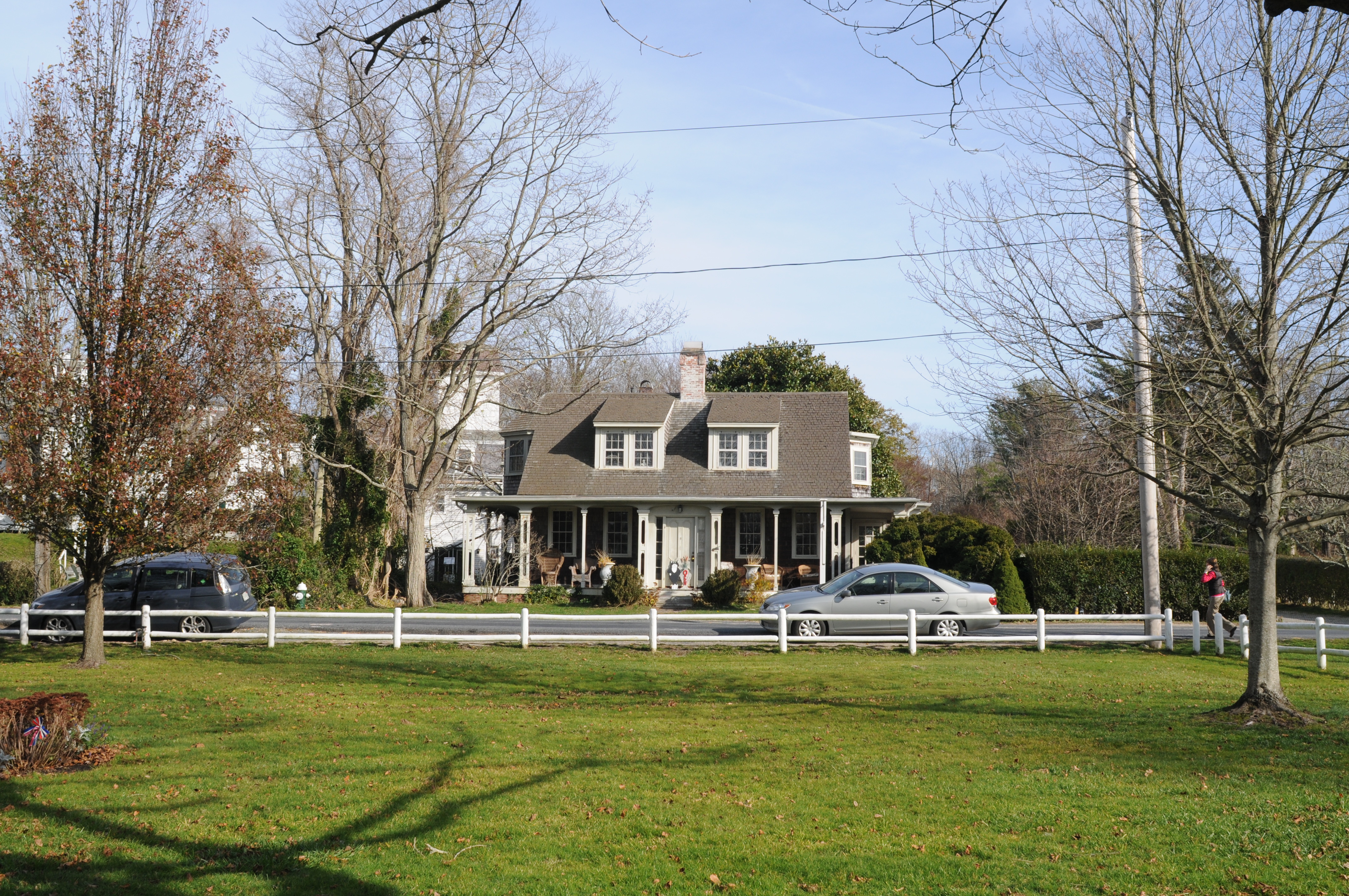
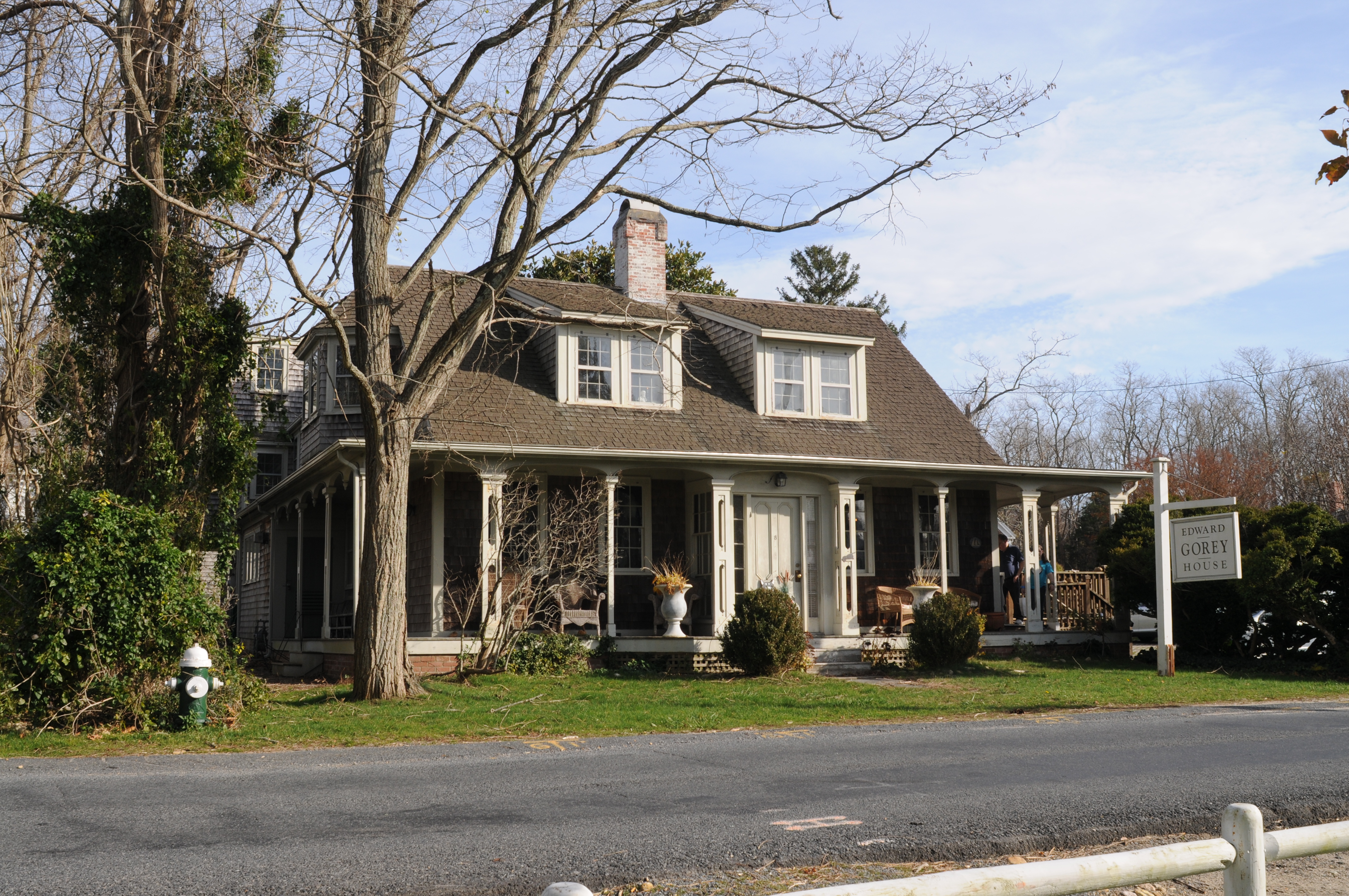
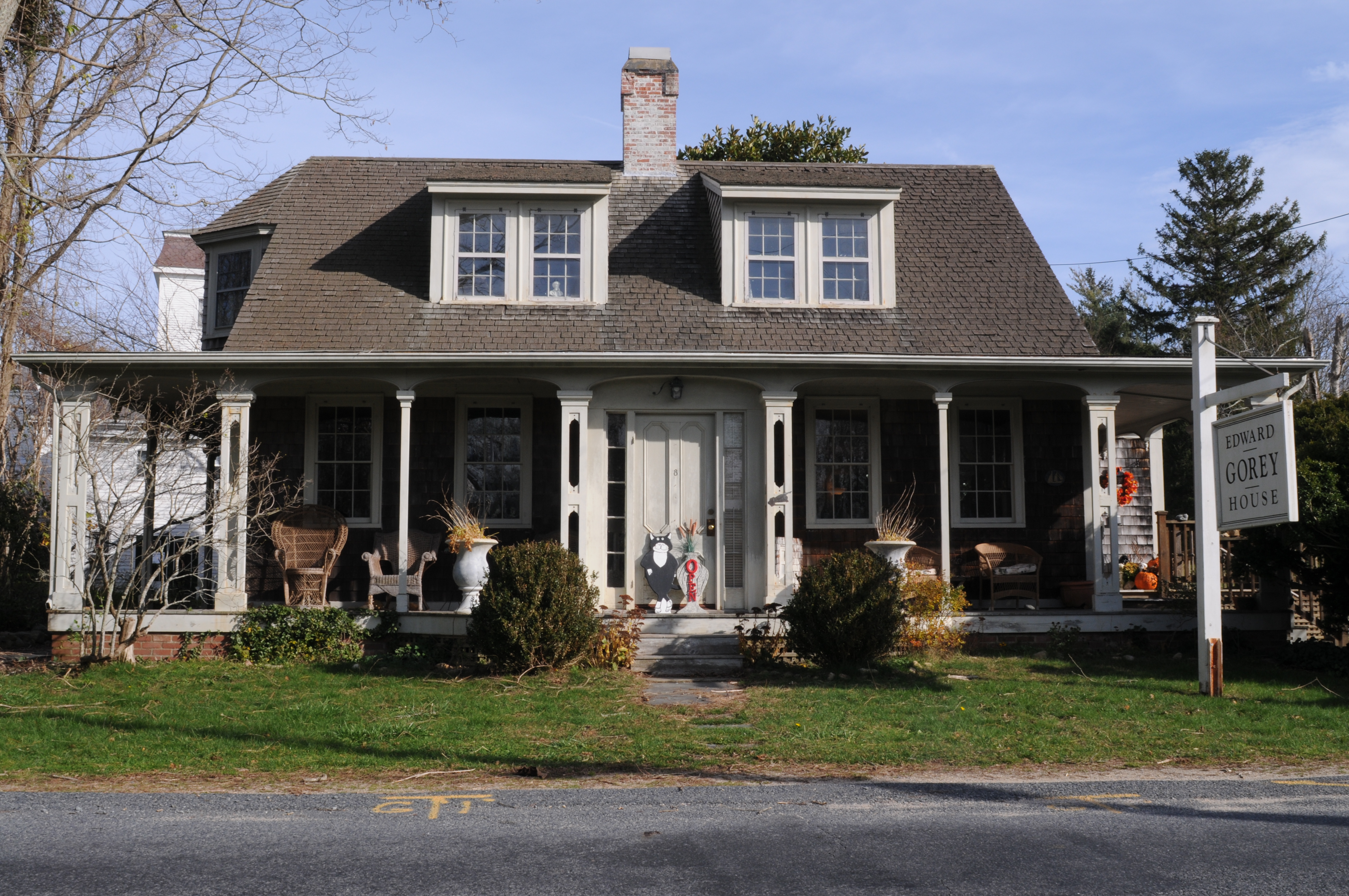
More about Edward Gorey: http://www.edwardgoreyhouse.org/biography

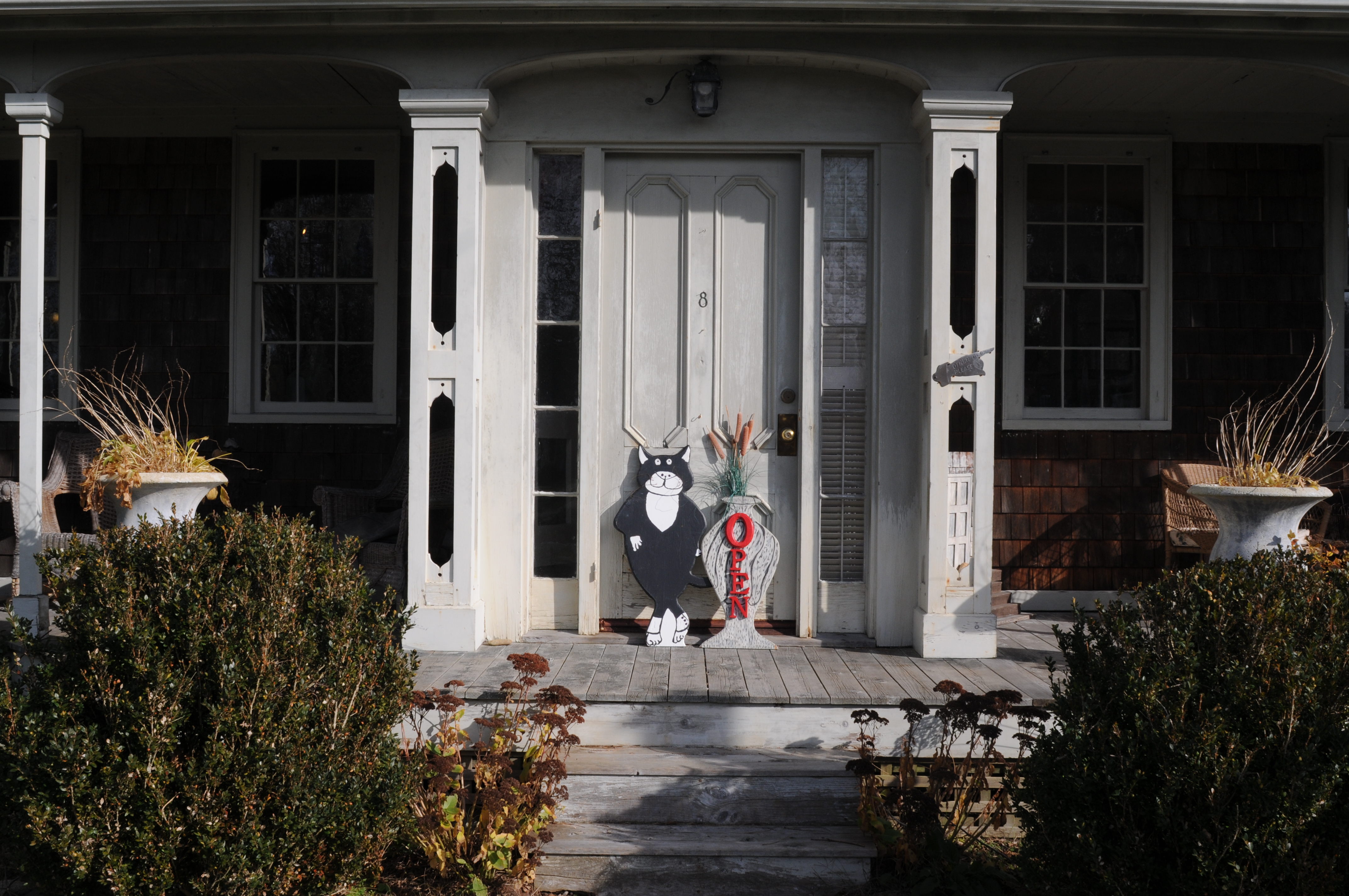
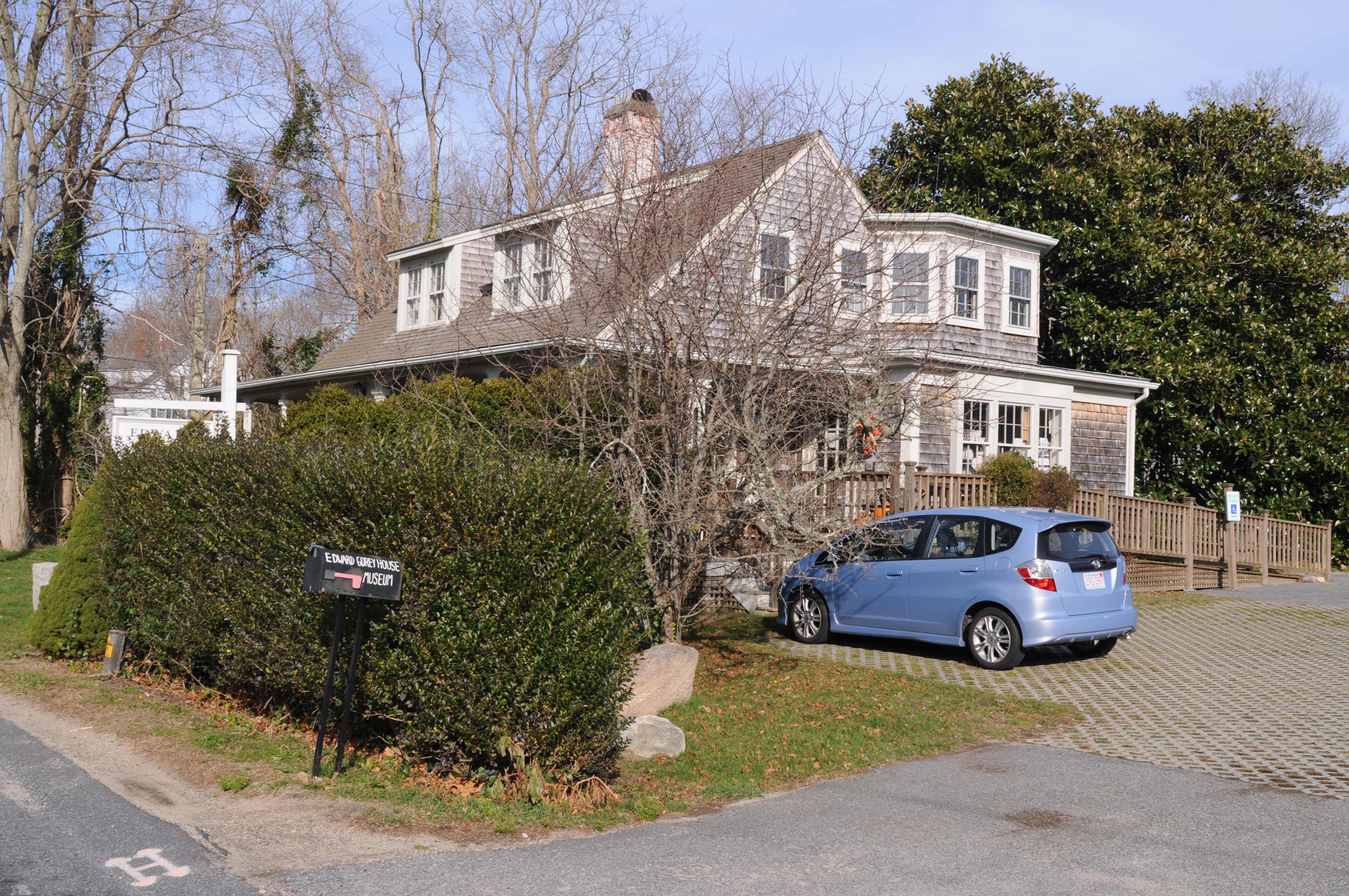
Here are some of my pics of the museum.

The Gorey House LBrady DSC_0851

The Gorey House LBrady DSC_0863

The Gorey House LBrady DSC_0854

The Gorey House LBrady DSC_0866

The Gorey House LBrady DSC_0861

The Gorey House LBrady DSC_0864