



Image

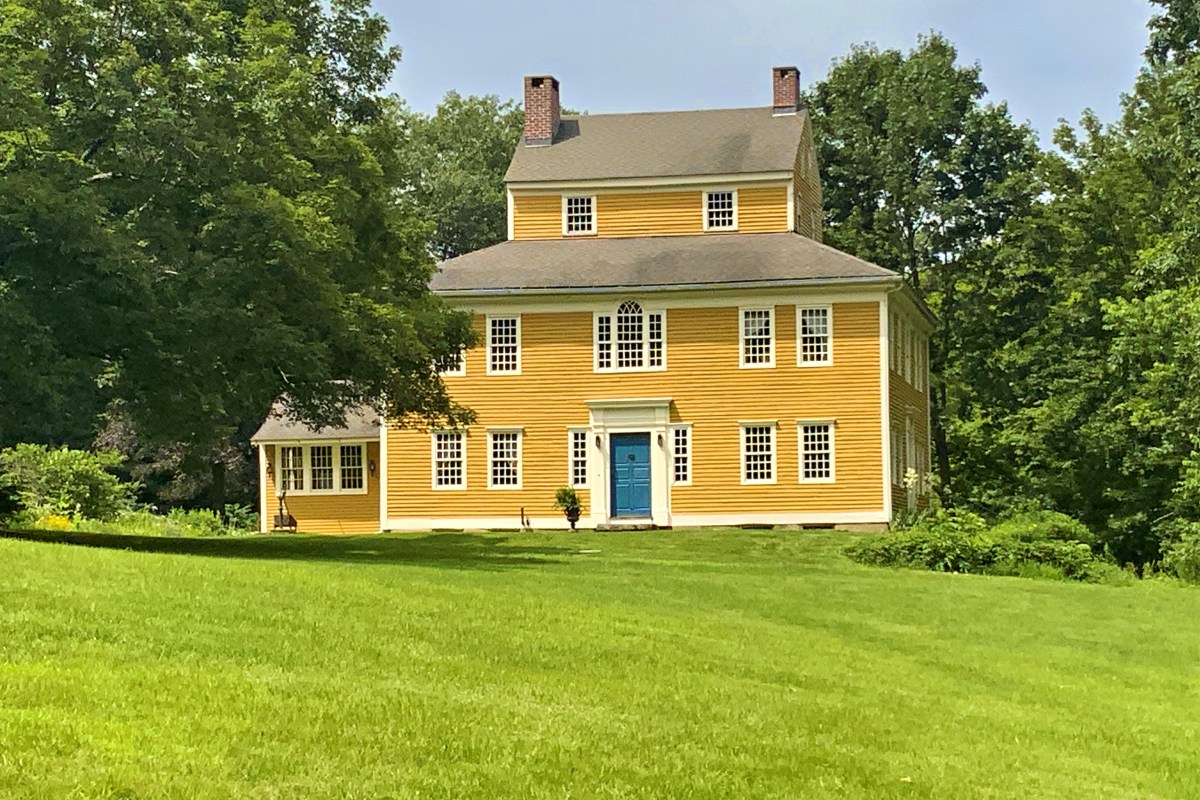
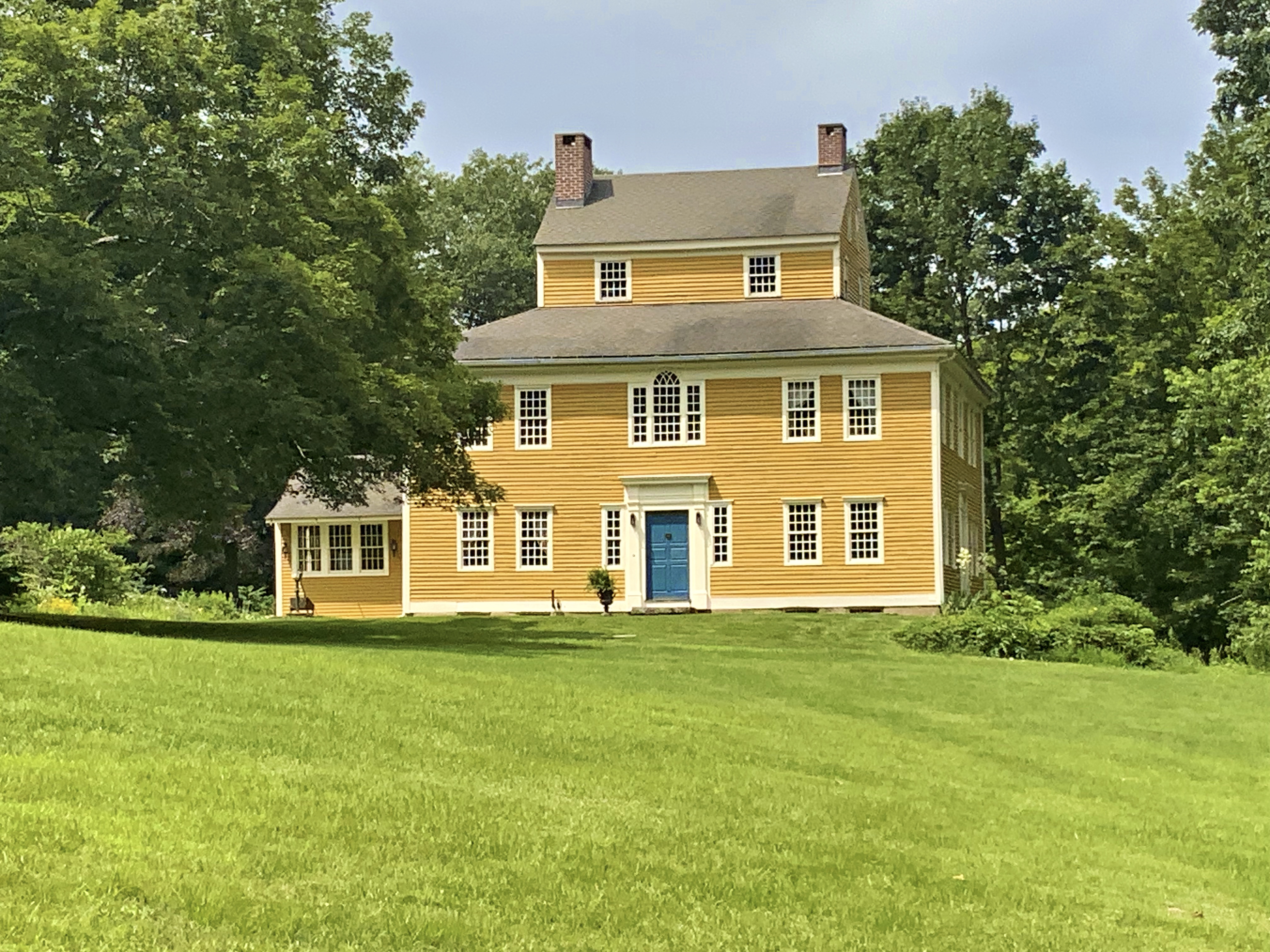
Benjamin Bosworth House | The Castle | Eastford, CT

Welcome to the Benjamin Bosworth House, affectionately known locally as The Castle. This extraordinary Federal-style home, Circa 1796, blends timeless craftsmanship with historic character. Set on 3 private acres, this 4, 538 sq ft estate features 4 bedrooms, 2.5 baths, and 11 fireplaces across a thoughtfully designed layout. Notable architectural details include hand-carved mantels, doors, and windows-crafted by a woodworker who lived onsite through a winter. The centerpiece is a rare full-height monitor, originally a Masonic meeting hall, complete with fireplaces and built-in benches. Inside you’ll find grand halls, a formal parlor, Dining room with bookcases & original China closet, tea room or keeping room gets afternoon sun, office, Studio, workshop, pantry, and laundry.1/2 bath with original wooden drain board & copper sink, Kitchen has antique basin, custom cherry wood pantry, hand painted stenciled floors. Primary Bed with private shower bathroom, 3 beds & office and full bath finish 2nd floor. Listed on the National Register of Historic Places, this one-of-a-kind home offers the charm of 18th-century design with the potential for modern customization. Own a piece of Connecticut history in peaceful Eastford. The house features a two-story main block topped by a hip roof, with a distinctive full-height monitor section projecting from the center. Benjamin Bosworth, for whom the house was built, was a significant figure in Eastford’s history. He served on the building committee of the local Congregational Church and was instrumental in relocating the previous meeting house from the site. His desire for a distinctive residence led to the creation of this unique structure, which has since become a landmark in the area. Today, the Benjamin Bosworth House stands as a testament to early American architecture and the rich history of Eastford, Connecticut.


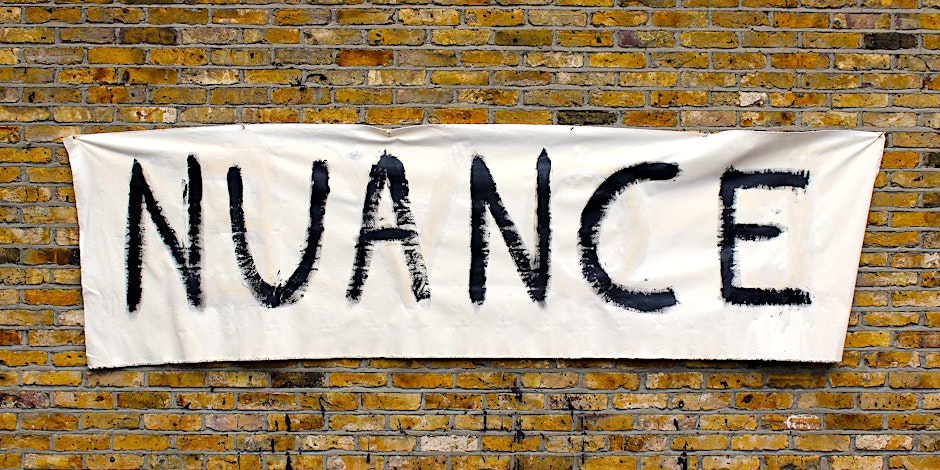
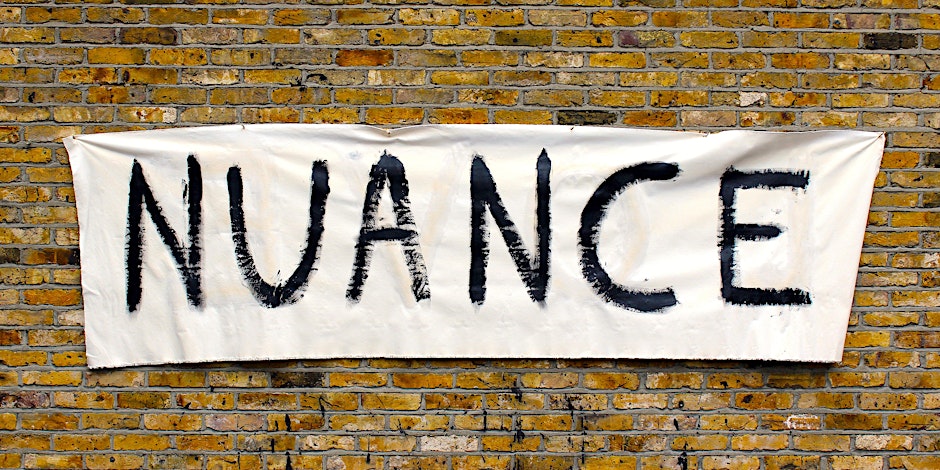
NUANCE | Call for Entries | IMPREINT, London

coming up …

Photography – entry deadline – sooner than later

NUANCE is the next artist collective to be hosted at the IMPREINT Space.

These open-access exhibitions bring together artists from all backgrounds and disciplines, with no hierarchy or labels—just the work itself. Rooted in inclusivity, openness, and artistic solidarity, each collective offers a space for genuine creative exchange and connection.

To participate, please submit a high-resolution image of your artwork to info@impreint.com. A video featuring all submitted works will be projected during the event and archived as a permanent online display.

Submissions may close early depending on capacity, so we encourage early entries.

The event will run from 5 PM to 10 PM.

We look forward to sharing this moment with you.

Learn more about previous artist collectives here.

War is a Racket | Why has Congress abrogated its responsibility?

I grew up in the the US, during the Vietnam War era. I’m an anti-war advocate, unless we are attacked and then all bets are off.

Whatever side of this current war you are on, it’s the US Congress’ responsibility, not a President’s or a Foreign government’s, to declare war.

I don’t think I’ve ever seen the US Congress declare war in my lifetime.

That said, Congress should all be dismissed and new elections run, if  it can’t or won’t fulfill its responsibilities. lb

ArtI.S8.C11.2.1 Overview of Declare War Clause

[The Congress shall have Power . . . ] To declare War, grant Letters of Marque and Reprisal, and make Rules concerning Captures on Land and Water; . . .

The Declare War Clause is a central element of Congress’s war powers and its meaning is among those most heavily debated.1 The Supreme Court has observed that only Congress has the power to declare war,2 but the implications of this exclusive assignment are not well-settled. In particular, the relationship between Congress’s power to declare war and the President’s war powers granted under Article II of the Constitution is a subject of significant disagreement.3

The first draft of the Constitution considered in Philadelphia in 1787 would have given Congress the power to make war, but the Framers substituted the word declare in what James Madison described as an effort to ensure that the President was empowered to repel sudden attacks.4 Under Congress’s interpretation of the Constitution, the President may introduce troops into hostile circumstances if Congress has (1) declared war, (2) specifically authorized the President to use force, or (3) there is a national emergency created by an attack on the United States or its territories.5 The executive branch claims much broader authority and asserts that the Constitution empowers the President to initiate and engage in many types of military action without congressional authorization.6

While this interbranch debate remains active, other questions concerning the Declare War Clause have been settled by longstanding practice and judicial opinions. For example, the Supreme Court has recognized that Congress need not issue a formal declaration of war to authorize the United States to engage in military action.7 Congress also can, by statute, authorize the President to use force within defined parameters that do not rise to the level of a general declaration of war.8 The United States has issued declarations of war against eleven countries during five conflicts, but it has not formally declared war since World War II.9 As a result, statutory authorizations have become the predominant method for Congress to permit military action since the Second World War.10

The Supreme Court has also observed that the Declare War Clause confers broad authority upon Congress to pursue the war effort.11 The power to Declare War, the Supreme Court stated in 1870, involves the power to prosecute it by all means and in any manner in which war may be legitimately prosecuted.12 In line with this interpretation, Congress has enacted an extensive set of statutes that trigger a host of special wartime authorities concerning the military, foreign trade, energy, communications, alien enemies, and other issues if Congress declares war.13